
SAP Skills: A Guide to Building a Career with SAP
SAP skills are the practical abilities needed to work with SAP software, which organisations use to manage business processes such as finance, procurement, sales, human resources and supply chains. These skills can be valuable across many industries, from manufacturing and retail to healthcare and professional services.
There is no single SAP career path. Some professionals configure systems and support business users, while others develop software, manage data or lead implementation projects. The right skills depend on the role, the SAP products in use and the needs of the organisation.
What are SAP skills?
SAP skills combine knowledge of business processes with the ability to use, configure or develop solutions in the SAP ecosystem. They generally fall into three broad areas:
- Functional skills: Understanding how business areas work and configuring SAP to support them. Examples include finance, procurement, sales, human resources and production planning.
- Technical skills: Developing, integrating, administering or troubleshooting SAP systems. These may include programming, database knowledge, system architecture and cloud technologies.
- Analytical and data skills: Working with business data, reports and analytics to help organisations make informed decisions.
Common SAP skills and specialisms
SAP offers products and solutions for different business needs. Familiarity with a particular area can help professionals build relevant expertise. Common specialisms include:
- SAP S/4HANA: Knowledge of SAP’s enterprise resource planning (ERP) suite and the business processes it supports.
- SAP Finance: Skills related to financial accounting, management accounting, reporting and financial operations.
- SAP procurement and supply chain: Understanding purchasing, inventory, logistics, production and supplier processes.
- SAP SuccessFactors: Knowledge of cloud-based human resources processes, such as employee management and recruitment.
- SAP development: Experience with ABAP, SAP’s programming language, or with tools used to extend and customise SAP applications.
- SAP integration: The ability to connect SAP applications with other systems and services.
- SAP analytics: Experience with reporting, data modelling and business intelligence tools.
Product names and capabilities can change over time, so it is useful to check which SAP technologies are relevant to the roles and organisations you are interested in.
Skills that support SAP expertise
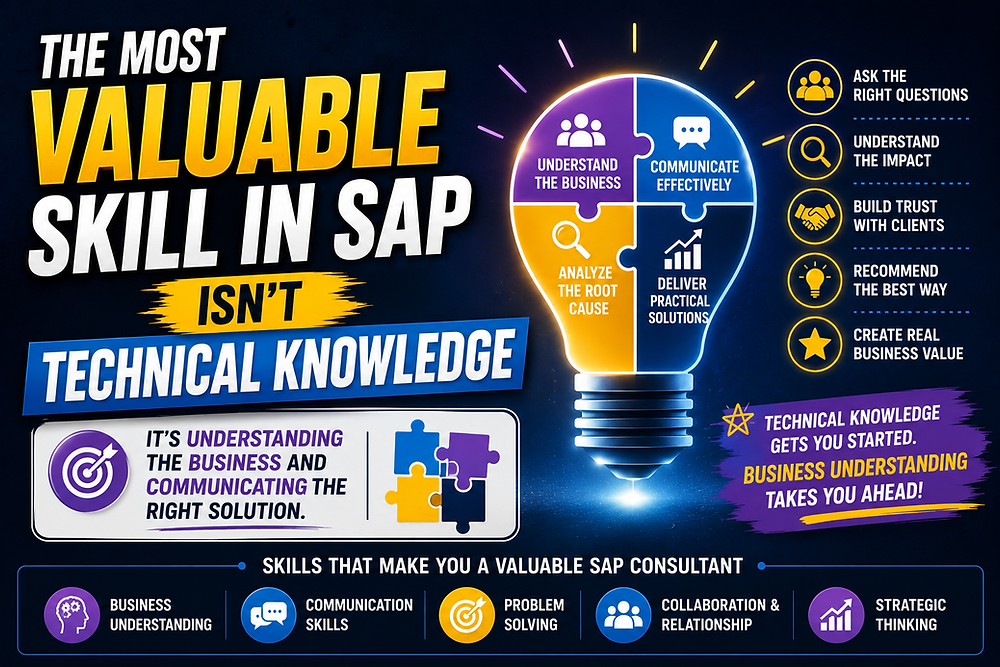
Technical knowledge is only part of the picture. Strong SAP professionals also need skills that help them understand problems and work effectively with others, including:
- Business process knowledge: Knowing how a department operates helps you configure or support systems in a way that meets its needs.
- Problem-solving: SAP work often involves investigating issues, identifying their cause and evaluating possible solutions.
- Communication: Professionals may need to explain technical topics to colleagues, clients or stakeholders who are not technical specialists.
- Attention to detail: Small configuration or data errors can affect important business processes.
- Project and change management: Implementations and upgrades require planning, testing, training and coordination.
- Adaptability: Organisations’ systems and requirements evolve, so ongoing learning is important.
How to develop SAP skills
- Choose a direction. Consider whether you are more interested in business processes, technical development, data or system administration.
- Build relevant foundations. Learn the basics of the business area you want to work in, such as accounting, procurement or human resources. For technical roles, develop knowledge of programming, databases or cloud computing.
- Use structured learning resources. SAP’s learning materials, training courses and documentation can help you understand specific products and topics.
- Practise where possible. Exercises, demonstrations and suitable practice systems can help turn theory into practical understanding. Follow any access and usage conditions that apply.
- Work on real business problems. Practical experience may come from a job, an internship, a project or collaboration with an organisation using SAP.
- Consider certification. A relevant SAP certification can help demonstrate knowledge, although employers may also look for practical experience and business understanding.
Which SAP skills should you learn first?
If you are new to SAP, begin with a clear career goal rather than trying to learn every product at once. An aspiring functional consultant might start with one business area and learn how its processes are represented in SAP. A developer could focus on programming and application extension. Someone interested in analytics might begin with data concepts, reporting and the relevant SAP tools.
Job adverts are a useful guide. Compare several roles that interest you and note the products, business knowledge and experience they request. This can help you prioritise learning and avoid spending time on technologies that are not relevant to your goals.
Career opportunities involving SAP
SAP skills can be relevant to roles such as SAP consultant, business analyst, application support specialist, developer, data analyst, solution architect or project manager. Responsibilities vary widely: some positions focus on a particular module, while others involve integration, implementation or support across several systems.
Employers often value a combination of SAP knowledge, business experience and the ability to work with stakeholders. As a result, experience in a related field—such as finance, logistics or human resources—can be a useful starting point for learning how SAP supports that area.
Keeping your SAP skills up to date
SAP products and workplace needs change, so learning should continue beyond an initial course or certification. Follow product updates relevant to your specialism, practise new techniques and review the skills requested in current job adverts. Equally important is developing transferable abilities such as analysis, clear communication and sound project delivery.
Conclusion
SAP skills cover a broad range of functional, technical and analytical expertise. The best place to start is with a specific role or business area, then build practical knowledge that connects SAP tools with real organisational needs. With focused learning and relevant experience, SAP expertise can support a variety of career paths.
7 Practical Tips to Develop Your SAP Skills
- Learn core SAP modules such as FI, MM or SD.
- Practise navigating SAP screens and transactions.
- Build confidence with SAP reporting tools.
- Understand how SAP supports business processes.
- Develop basic data analysis skills.
- Keep up with SAP S/4HANA updates.
- Practise troubleshooting common user issues.
Learn core SAP modules such as FI, MM or SD.
Learning the core SAP modules is a useful starting point for developing SAP skills. Consider focusing on FI (Financial Accounting), MM (Materials Management) or SD (Sales and Distribution), depending on your interests and career goals. Understanding the business processes behind your chosen module will help you see how SAP supports everyday work, while giving you a solid foundation for further study or a specialist role.
Practise navigating SAP screens and transactions.
Practise navigating SAP screens and transactions to become more confident and efficient when using the system. Start by learning how menus, search functions and key fields work, then repeat common tasks in a training or practice environment. Familiarity with transaction codes and screen layouts can help you find the right functions more quickly, reduce errors and feel better prepared for day-to-day SAP work.
Build confidence with SAP reporting tools.
Build confidence with SAP reporting tools by practising how to find, filter and interpret the information relevant to your role. Start with simple reports, explore available options and check that your results are accurate before sharing them. As you become more comfortable, try comparing data and creating views that answer specific business questions. These skills can help you make better-informed decisions and communicate insights clearly.
Understand how SAP supports business processes.
Understanding how SAP supports business processes is a valuable foundation for developing SAP skills. Rather than focusing only on software features, learn how tasks such as managing finances, purchasing goods or fulfilling customer orders flow through an organisation, and how SAP helps people record information and complete each step. This process-focused knowledge makes it easier to see how different parts of a system connect, identify where problems may arise and suggest solutions that meet genuine business needs.
Develop basic data analysis skills.
Developing basic data analysis skills can make your SAP expertise more valuable. Learn how to work with spreadsheets, interpret reports, spot trends and check data for errors. These abilities help you understand what SAP information is showing, identify potential issues and share useful insights with colleagues. You do not need to become a data scientist: a sound grasp of figures, clear reasoning and attention to detail are a strong foundation.
Keep up with SAP S/4HANA updates.
Keep up with SAP S/4HANA updates to ensure your skills remain relevant as the platform evolves. Follow official SAP release notes and learning resources to understand new features, changes and recommended practices, then consider how they may affect business processes and existing systems. Regular learning can help you contribute more confidently to implementations, upgrades and day-to-day support.
Practise troubleshooting common user issues.
Practising how to troubleshoot common user issues is a valuable way to build SAP skills. Learn to investigate problems such as access errors, incorrect data and failed transactions by checking the details, following the relevant process and identifying where things went wrong. Regular practice can help you resolve issues more confidently, explain solutions clearly to users and recognise when a problem needs to be escalated.