
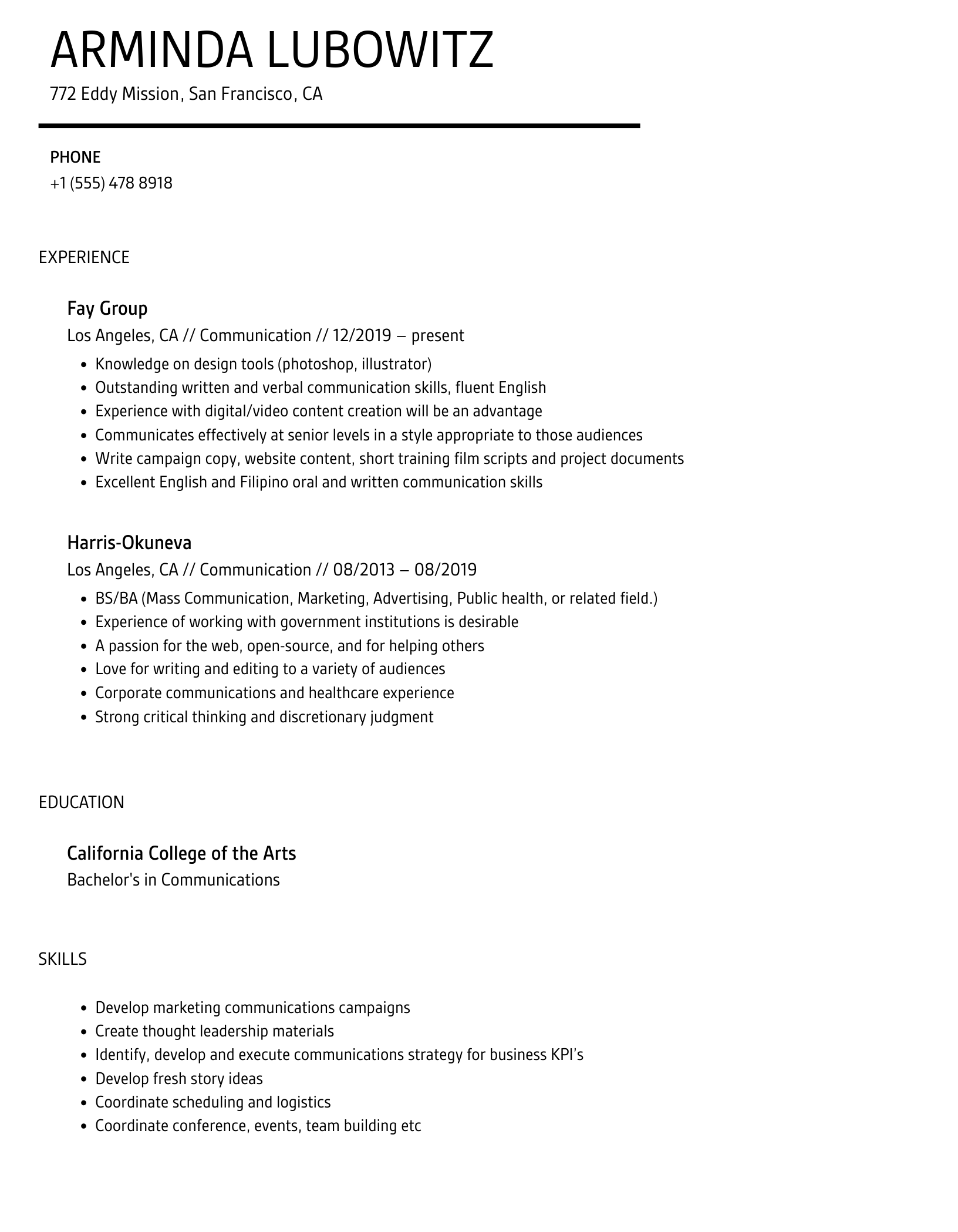
The Art of Written Communication: Examples of Essential Skills
Effective written communication is a cornerstone of success in both personal and professional realms. The ability to convey your thoughts clearly and concisely through writing can make a significant impact on how your message is received. Let’s explore some examples of essential written communication skills:
Clarity
One of the most crucial aspects of written communication is clarity. This involves structuring your sentences and paragraphs in a way that is easy to understand for the reader. Avoiding jargon, using simple language, and organising your ideas logically can enhance the clarity of your message.
Conciseness
Being concise means conveying your message succinctly without unnecessary details or wordiness. By getting straight to the point and eliminating redundant information, you can keep your reader engaged and ensure that your message is easily digestible.
Tone and Style
The tone and style of your writing play a significant role in how your message is perceived. Whether formal or informal, adopting an appropriate tone for the context can help you establish rapport with your audience. Consistency in tone throughout your communication also adds to its effectiveness.
Grammar and Punctuation
Correct grammar and punctuation are essential for conveying your ideas accurately and professionally. Paying attention to punctuation marks, subject-verb agreement, verb tenses, and sentence structure can enhance the readability of your writing.
Proofreading and Editing
Proofreading and editing are vital steps in refining your written communication. By reviewing your work for errors in spelling, grammar, or syntax, you can ensure that your message is polished before sharing it with others.
In conclusion, honing your written communication skills through practices such as clarity, conciseness, appropriate tone, grammar accuracy, proofreading, and editing can elevate the impact of your messages across various platforms. By mastering these skills, you can become a more effective communicator in both personal and professional settings.
Seven Advantages of Exemplary Written Communication Skills
- Enhance clarity of message
- Facilitate effective information sharing
- Establish professionalism and credibility
- Improve organisational skills
- Enable better collaboration and teamwork
- Boost confidence in expressing ideas
- Enhance career opportunities and advancement
Challenges of Written Communication: Misinterpretation, Delayed Feedback, Inefficiency, and Emotional Conveyance
Enhance clarity of message
Enhancing clarity of message is a significant benefit of strong written communication skills. By structuring sentences and organising ideas in a clear and concise manner, individuals can ensure that their message is easily understood by the reader. Clear communication helps to avoid misunderstandings and misinterpretations, allowing the intended meaning to be conveyed effectively. When messages are presented with clarity, it fosters better comprehension and engagement, ultimately leading to more successful communication exchanges.
Facilitate effective information sharing
Effective written communication skills examples facilitate effective information sharing by ensuring that messages are conveyed clearly, concisely, and accurately. When individuals possess strong written communication abilities, they can articulate their ideas in a way that is easily understood by others, leading to smoother exchanges of information. Whether it’s through emails, reports, or other written documents, the ability to communicate effectively in writing helps to streamline communication processes and promote better understanding among recipients. Ultimately, proficient written communication skills play a crucial role in enhancing information sharing within various contexts and fostering productive interactions.
Establish professionalism and credibility
Effective written communication skills can establish professionalism and credibility in various contexts. By crafting well-written messages that are clear, concise, and free of errors, individuals can showcase their attention to detail and commitment to quality. Whether in business correspondence, academic papers, or professional emails, demonstrating strong written communication skills can enhance one’s reputation and credibility among peers and stakeholders. Clear and professional writing reflects positively on an individual’s competence and expertise, helping to build trust and respect in their interactions.
Improve organisational skills
Enhancing written communication skills can significantly improve organisational abilities. When individuals effectively convey their thoughts and ideas through writing, they are required to structure information logically, prioritise key points, and present them in a coherent manner. This process not only sharpens their ability to organise thoughts but also helps in developing a systematic approach to tasks and projects. Clear and well-organised written communication can streamline workflows, facilitate better collaboration, and ultimately boost productivity within both personal and professional environments.
Enable better collaboration and teamwork
Effective written communication skills enable better collaboration and teamwork by fostering clear and efficient exchange of ideas, feedback, and information among team members. When individuals can articulate their thoughts concisely and accurately through writing, it streamlines communication processes, reduces misunderstandings, and enhances overall productivity. Strong written communication skills also promote transparency within teams, ensuring that everyone is on the same page and working towards common goals. By facilitating seamless interaction and understanding among team members, written communication skills play a vital role in promoting synergy and success in collaborative endeavours.
Boost confidence in expressing ideas
Developing strong written communication skills can significantly boost confidence in expressing ideas. When individuals are able to articulate their thoughts clearly and effectively on paper, they gain a sense of assurance in their ability to communicate with others. This increased confidence not only enhances their writing proficiency but also translates into improved verbal communication skills, enabling them to express their ideas confidently in various settings. Ultimately, mastering written communication empowers individuals to share their thoughts and perspectives with clarity and conviction, fostering greater self-assurance in both personal and professional interactions.
Enhance career opportunities and advancement
Strong written communication skills can significantly enhance career opportunities and advancement prospects. In today’s competitive job market, the ability to articulate ideas clearly and persuasively through writing is highly valued by employers. Effective written communication can help individuals stand out in job applications, impress colleagues with well-crafted reports and presentations, and build strong relationships with clients and stakeholders. By demonstrating proficiency in written communication, professionals can open doors to new opportunities, take on leadership roles, and progress in their careers with confidence.
Misinterpretation
Misinterpretation is a significant con of written communication skills examples. Despite one’s best efforts to be clear and concise, there is always a risk of misinterpretation. Differences in interpretation, cultural nuances, or the absence of context can lead to misunderstandings and miscommunication. This highlights the importance of not only mastering written communication skills but also being mindful of the potential for misinterpretation and taking steps to mitigate it through clarity, context setting, and active engagement with the audience.
Lack of Immediate Feedback
In the realm of written communication skills, a significant drawback is the lack of immediate feedback. Unlike verbal exchanges where clarification and feedback can be provided instantaneously, written messages do not offer this real-time interaction. This limitation can result in misunderstandings or misinterpretations as there is no immediate opportunity to address questions or concerns that may arise during the communication process. Consequently, individuals must strive for clarity and precision in their written communication to mitigate the risk of confusion or ambiguity due to the absence of immediate feedback mechanisms.
Inefficiency
One significant drawback of written communication skills is inefficiency. Composing written messages can be a time-consuming process, particularly when contrasted with the immediacy of verbal communication channels like face-to-face discussions or phone calls. The need to carefully craft and edit written content can slow down the exchange of information, potentially leading to delays in decision-making or response times. Despite its benefits, the time-intensive nature of written communication can pose challenges in situations where quick and real-time interactions are necessary.
Difficulty in Conveying Emotions
Written communication skills examples have a con in the difficulty of conveying emotions effectively. Unlike verbal interactions that benefit from tone of voice and nuances, written communication may lack these elements, making it challenging to express emotions accurately. Without the ability to convey tone through spoken words, writers must rely on their choice of words and phrasing to communicate feelings, which can sometimes lead to misunderstandings or misinterpretations.