
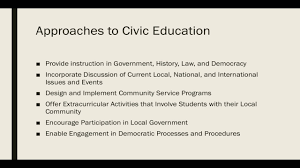
The Importance of Civic Education
Civic education plays a crucial role in shaping informed and responsible citizens who actively participate in society. It encompasses a range of topics, including government structures, political processes, rights and responsibilities, and the importance of civic engagement.
One of the key benefits of civic education is that it empowers individuals to understand how their government functions and how decisions are made. By learning about the democratic process, citizens can effectively advocate for change, hold elected officials accountable, and contribute to the development of their communities.
Furthermore, civic education helps foster a sense of civic duty and responsibility. It teaches individuals the importance of respecting the rule of law, upholding democratic values, and valuing diversity and inclusion. By instilling these principles early on, civic education helps create a more cohesive and tolerant society.
Moreover, civic education equips individuals with the knowledge and skills needed to participate meaningfully in democracy. This includes understanding how to critically evaluate information, engage in civil discourse, and make informed decisions when voting or taking part in public debates.
Ultimately, civic education is essential for building a strong foundation for democracy. By educating citizens about their rights and responsibilities, as well as the importance of active citizenship, we can create a more engaged and participatory society that works towards common goals for the betterment of all.
Six Essential Tips for Enhancing Your Civic Education
- Stay informed about current events and political issues
- Engage in respectful discussions with others who have different opinions
- Volunteer in your community to make a positive impact
- Learn about the structure of government and how it functions
- Exercise your right to vote in elections
- Advocate for social justice and equality for all
Stay informed about current events and political issues
Staying informed about current events and political issues is a crucial aspect of civic education. By keeping abreast of the latest news and developments, individuals can better understand the context in which decisions are made and policies are implemented. This knowledge empowers citizens to engage in informed discussions, critically evaluate different perspectives, and actively participate in shaping the future of their communities and society as a whole. Being aware of current events not only enhances one’s civic awareness but also contributes to a more vibrant and participatory democracy.
Engage in respectful discussions with others who have different opinions
Engaging in respectful discussions with individuals who hold differing opinions is a fundamental aspect of civic education. By fostering open dialogue and actively listening to diverse perspectives, we not only broaden our own understanding but also contribute to a more inclusive and tolerant society. Respectful discussions enable us to challenge our own beliefs, learn from others, and find common ground on issues that affect our communities. Embracing differing viewpoints with civility and empathy is key to promoting constructive discourse and building stronger relationships based on mutual respect and understanding.
Volunteer in your community to make a positive impact
Volunteering in your community is a powerful way to actively engage in civic education and make a positive impact. By dedicating your time and skills to local causes, you not only contribute to the well-being of those around you but also gain firsthand experience in addressing social issues and working towards solutions. Volunteering allows you to connect with diverse groups of people, understand different perspectives, and develop empathy and compassion – all essential aspects of being an informed and responsible citizen. Through volunteering, you can play a direct role in shaping your community for the better while also deepening your understanding of civic engagement and the importance of collective action.
Learn about the structure of government and how it functions
Understanding the structure of government and how it functions is a fundamental aspect of civic education. By delving into the different branches of government, such as the executive, legislative, and judicial branches, individuals can grasp how power is distributed and decisions are made. Learning about the roles and responsibilities of each branch helps citizens navigate the political landscape more effectively, enabling them to engage with the system in a meaningful way. This knowledge empowers individuals to participate in democracy with confidence and advocate for positive change within their communities.
Exercise your right to vote in elections
Exercising your right to vote in elections is a fundamental aspect of civic education. By participating in the electoral process, individuals have the opportunity to have their voices heard and influence the direction of their community and country. Voting is not only a right but also a responsibility that comes with being a citizen in a democratic society. It allows individuals to choose representatives who align with their values and priorities, shaping policies and decisions that impact everyone. Therefore, by actively engaging in elections, citizens can contribute to building a more inclusive, responsive, and accountable government that reflects the will of the people.
Advocate for social justice and equality for all
Advocating for social justice and equality for all is a fundamental aspect of civic education. By standing up for the rights and dignity of every individual, we not only uphold the principles of democracy but also contribute to creating a more inclusive and fair society. Through education and awareness, we can challenge systemic injustices, address inequalities, and work towards a future where everyone has equal opportunities and access to resources. It is through active advocacy and engagement that we can strive towards a more just and equitable world for all members of our community.