
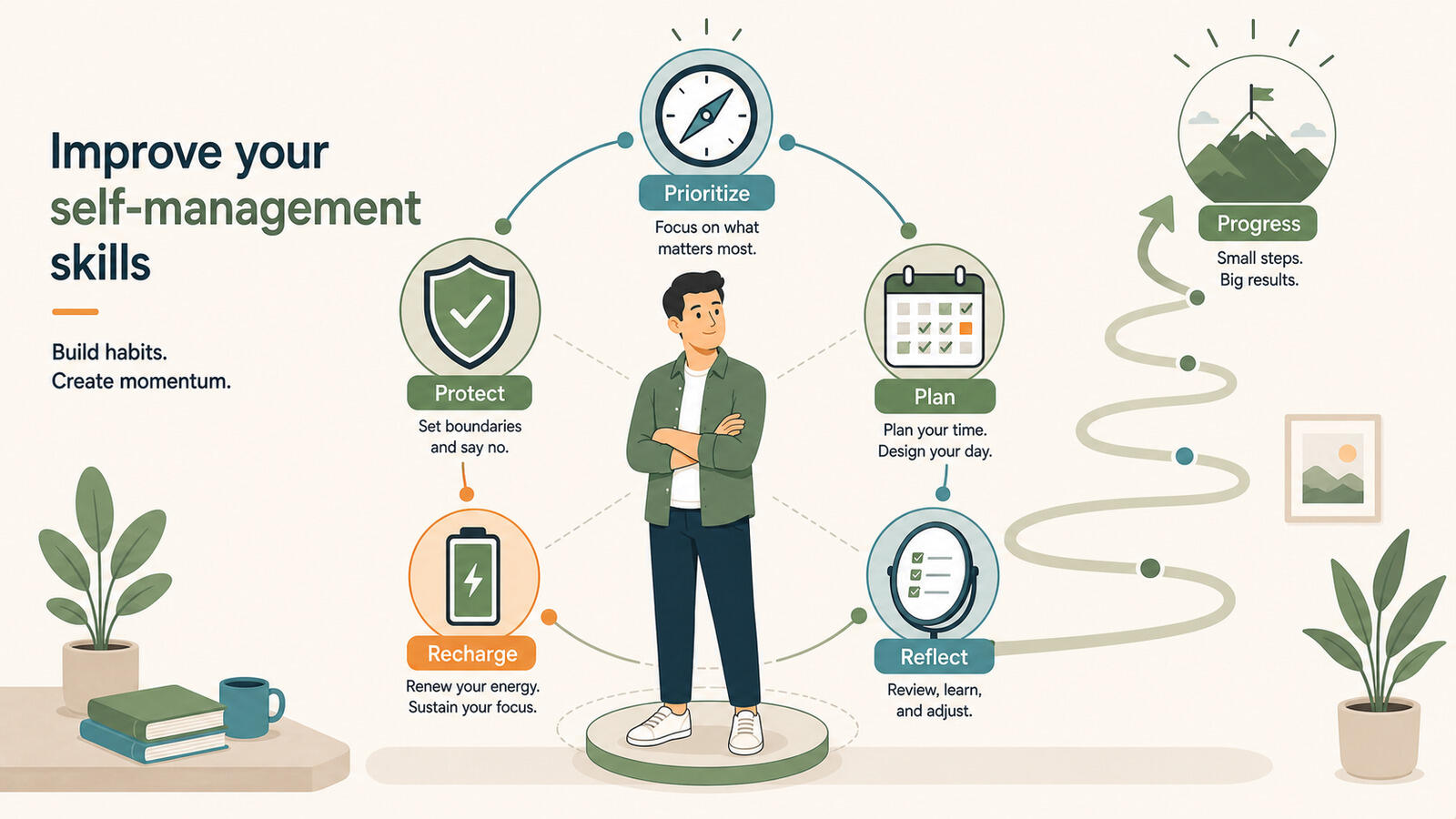
Improving Your Self-Management Skills
Self-management skills are crucial for personal and professional success. Being able to effectively manage your time, emotions, and tasks can lead to increased productivity, better decision-making, and overall well-being. Here are some tips to help you improve your self-management skills:
Set Clear Goals
Start by setting clear and achievable goals for yourself. Define what you want to accomplish in the short-term and long-term. Having specific goals will give you direction and motivation to stay focused.
Manage Your Time Wisely
Prioritise your tasks based on importance and urgency. Create a schedule or to-do list to organise your day efficiently. Avoid procrastination and allocate time for both work and relaxation.
Develop Emotional Intelligence
Emotional intelligence is key to managing stress, conflict, and relationships effectively. Practice self-awareness, empathy, and communication skills to enhance your emotional intelligence and handle challenging situations with ease.
Learn to Delegate
Recognise when you need help and learn to delegate tasks when necessary. Delegating responsibilities can free up your time for more important matters and improve overall efficiency.
Stay Organised
Maintain a clutter-free workspace and keep track of deadlines, appointments, and commitments. Use tools like calendars, planners, or digital apps to stay organised and avoid unnecessary stress from disorganisation.
By implementing these strategies into your daily routine, you can enhance your self-management skills and achieve greater success in both your personal and professional life.
Essential Questions on Enhancing Self-Management Skills: A Comprehensive Guide
- What are self-management skills class 9 notes?
- What are the 12 rules of self-management?
- What is self-management skills class 10?
- What are the 5 basic management skills?
- What are the 5 developing self-management skills?
- What is strong self-management skills?
- What are the 7 self-management skills?
- What are the personal management skills?
- What are the 5 self-management skills?
What are self-management skills class 9 notes?
Self-management skills are essential abilities that enable individuals to effectively control and direct their actions, emotions, and behaviours. In Class 9 notes, students may encounter topics related to developing self-management skills, such as setting goals, time management, emotional intelligence, delegation, and organisation. These notes aim to provide students with valuable insights and strategies to enhance their ability to manage themselves efficiently and achieve success in various aspects of their lives. By understanding and practising these self-management skills early on, students can lay a strong foundation for personal growth and future accomplishments.
What are the 12 rules of self-management?
When it comes to improving self-management skills, understanding and implementing the 12 rules of self-management can be highly beneficial. These rules encompass various aspects such as goal setting, time management, prioritisation, and emotional intelligence. By following these guidelines, individuals can enhance their ability to set clear objectives, organise their time effectively, delegate tasks when needed, and develop a deeper understanding of their emotions and interactions with others. Embracing the 12 rules of self-management serves as a roadmap for personal growth and success in navigating the complexities of daily life.
What is self-management skills class 10?
Self-management skills refer to the ability to regulate and control one’s own thoughts, emotions, and actions effectively. In the context of Class 10 education, self-management skills are essential for students to handle academic responsibilities, time management, stress management, and decision-making. Developing these skills at a young age can help students navigate challenges, stay organised, set goals, and maintain a healthy work-life balance. By honing their self-management skills in Class 10, students can lay a strong foundation for personal growth and success in their academic journey and beyond.
What are the 5 basic management skills?
When it comes to improving self-management skills, understanding the five basic management skills is essential. These skills include planning, organising, leading, controlling, and communicating. Planning involves setting goals and determining the best course of action to achieve them. Organising requires structuring tasks and resources effectively. Leading entails motivating and guiding others towards a common goal. Controlling involves monitoring progress and making adjustments as needed. Effective communication is key to conveying information clearly and fostering collaboration. By honing these fundamental management skills, individuals can enhance their ability to manage themselves efficiently and achieve their objectives successfully.
What are the 5 developing self-management skills?
Developing self-management skills is essential for personal growth and success. The five key areas to focus on when improving self-management skills include goal setting, time management, emotional intelligence, delegation, and organisation. Setting clear and achievable goals provides direction and motivation, while effective time management ensures tasks are prioritised and completed efficiently. Developing emotional intelligence allows for better stress management and conflict resolution. Learning to delegate tasks when needed improves overall productivity, and staying organised helps maintain clarity and focus in daily activities. By honing these five skills, individuals can enhance their ability to manage themselves effectively in various aspects of their lives.
What is strong self-management skills?
Strong self-management skills refer to the ability to effectively regulate and control one’s emotions, behaviours, and tasks in a proactive and productive manner. Individuals with strong self-management skills demonstrate traits such as goal-setting, time management, decision-making, adaptability, and resilience. They can prioritise tasks efficiently, stay focused on their objectives, handle stress and challenges effectively, and maintain a healthy work-life balance. Developing strong self-management skills is essential for personal growth, career advancement, and overall well-being.
What are the 7 self-management skills?
When it comes to improving self-management skills, understanding the key components is essential. The seven self-management skills encompass goal setting, time management, stress management, decision-making, emotional intelligence, resilience, and adaptability. By honing these skills, individuals can enhance their ability to navigate challenges effectively, prioritise tasks efficiently, and maintain a healthy work-life balance. Developing proficiency in these areas not only fosters personal growth but also contributes to overall success in various aspects of life.
What are the personal management skills?
Personal management skills encompass a range of abilities that enable individuals to effectively control and direct their own actions, emotions, and decisions. These skills include time management, goal setting, self-discipline, adaptability, stress management, and effective communication. By honing personal management skills, individuals can enhance their productivity, achieve their goals efficiently, navigate challenges with resilience, and maintain a healthy work-life balance. Cultivating these skills is essential for personal growth and success in various aspects of life.
What are the 5 self-management skills?
When seeking to enhance self-management skills, it is essential to focus on five key areas. These include goal setting, time management, emotional intelligence, delegation, and organisation. Setting clear and achievable goals provides direction and motivation. Effective time management involves prioritising tasks and creating schedules for optimal productivity. Developing emotional intelligence aids in handling stress and relationships adeptly. Learning to delegate tasks when necessary can improve efficiency. Lastly, maintaining organisation through clutter-free spaces and effective planning ensures smooth operations in both personal and professional spheres. Mastering these five self-management skills can lead to increased effectiveness and overall well-being.