
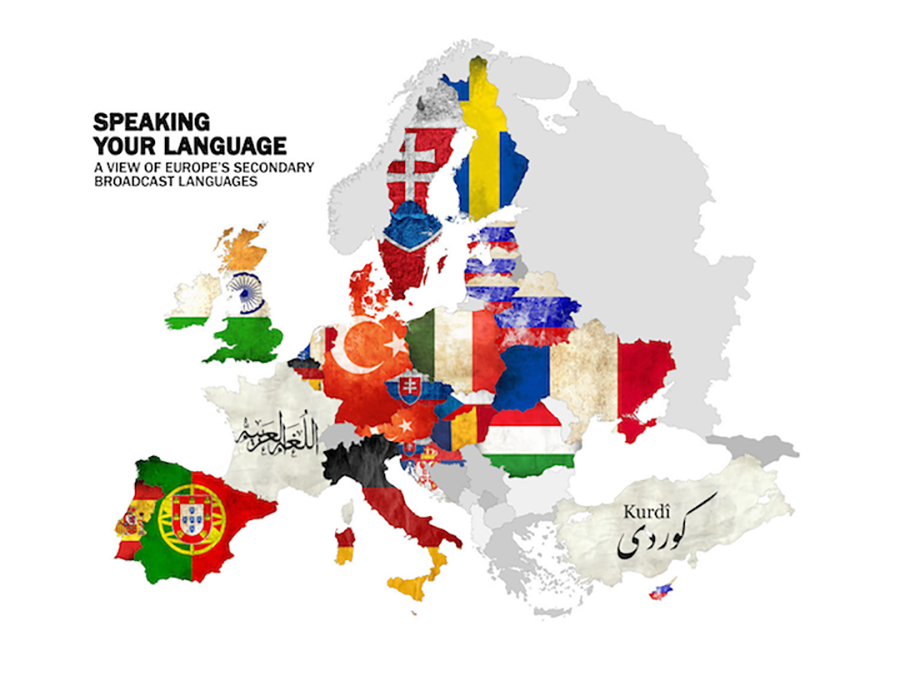
European Languages: A Rich Tapestry of Voices
Europe is home to remarkable linguistic diversity. From widely spoken languages such as English, Spanish and French to regional and minority languages with deep local roots, its languages reflect centuries of migration, cultural exchange and changing borders.
More than one language family
Many European languages belong to the Indo-European family, but they are divided into several branches. Germanic languages include English, German, Dutch and Swedish. Romance languages, which developed from Latin, include Italian, Portuguese, Romanian and French. Slavic languages include Polish, Czech, Ukrainian and Bulgarian, while Greek, Albanian and the Celtic languages form distinct branches of their own.
Not every language spoken in Europe is Indo-European. Finnish, Estonian and Hungarian belong to the Uralic family, while Basque is a language isolate, meaning it has no confirmed close relatives among living languages. Turkish is also spoken widely in parts of Europe and belongs to the Turkic language family.
Official languages and everyday multilingualism
The European Union has 24 official languages. These are the languages used for EU legislation and official communication, but they are only part of the picture. Europe is also home to many national, regional and minority languages, as well as languages brought by communities from around the world.
In many countries, people use more than one language in daily life. A person may speak a national language at school or work, a regional language at home, and another language when travelling or communicating online. Multilingualism is especially common in border regions and countries with several official languages.
Regional and minority languages
Languages such as Welsh, Catalan, Basque, Sámi and Breton are closely connected to the histories and identities of the communities that speak them. Their status and use vary from place to place: some are taught in schools or used in public services, while others depend on community efforts and family transmission to remain strong.
Language preservation can involve education, publishing, broadcasting and digital resources. These efforts help ensure that younger generations can learn and use their languages, while also keeping local traditions and knowledge alive.
Languages in a changing Europe
Travel, study, work and technology continue to bring Europe’s speakers into contact. English is often used as a shared language in international settings, but learning other languages can offer a deeper understanding of local culture and make everyday interactions more meaningful.
Translation tools have made communication across languages easier, yet they do not replace the value of learning a language. Even a few words can show respect, build connections and open the door to new perspectives.
A shared heritage of diversity
European languages are more than systems of communication. They carry literature, humour, memory and ways of seeing the world. Their variety can sometimes present practical challenges, but it is also one of Europe’s great cultural strengths. Protecting that diversity helps make space for more people to express who they are and to take part in a shared European life.
Mastering European Languages: 8 Essential Tips for Travellers
- Learn common greetings in the language you’re visiting.
- Practise listening to different regional accents.
- Watch out for false friends between related languages.
- Learn noun genders alongside new vocabulary.
- Use accent marks when writing words.
- Try learning a few useful phrases before travelling.
- Notice how word order differs between languages.
- Practise rolling the ‘r’ in languages that use it.
Learn common greetings in the language you’re visiting.
Learn a few common greetings before visiting a European country. A simple “hello”, “please” or “thank you” in the local language can make everyday interactions warmer and show respect for local customs. You don’t need to speak fluently: practising the pronunciation and using a greeting when you arrive at a shop, café or hotel is a small gesture that can help you connect with people and make your trip more enjoyable.
Practise listening to different regional accents.
Practising with different regional accents can make it easier to understand European languages in real-life situations. Listen to podcasts, radio programmes, films and conversations from different regions, paying attention to pronunciation, rhythm and local expressions. Start with familiar topics, and don’t worry if you miss a few words: regular exposure will help you recognise patterns and feel more confident speaking with people from across Europe.
Watch out for false friends between related languages.
When learning a European language, watch out for “false friends”: words that look or sound similar in two related languages but have different meanings. For example, the English word “actual” means real or current, while the Spanish actual means current. These similarities can be tempting, but guessing may lead to misunderstandings. Make a note of unfamiliar lookalike words and check their meaning in context.
Learn noun genders alongside new vocabulary.
When learning a European language with grammatical gender, make a habit of learning each noun together with its article or gender marker. For example, instead of memorising a word on its own, learn it as a complete phrase such as la maison in French or der Tisch in German. This helps you remember whether a noun is masculine, feminine or neuter, and makes it easier to choose the right articles and adjective endings when you form sentences.
Use accent marks when writing words.
When writing in a European language, use accent marks and other diacritics wherever they belong. These marks can change a word’s pronunciation or meaning, and leaving them out may make your writing harder to understand or appear careless. For example, French distinguishes “ou” (“or”) from “où” (“where”), while Spanish uses the accent in “sí” (“yes”) to distinguish it from “si” (“if”). If you’re unsure, check a reliable dictionary or enable the correct language settings on your keyboard.
Try learning a few useful phrases before travelling.
Before travelling, try learning a few useful phrases in the local language, such as “hello”, “please”, “thank you” and “excuse me”. Even a small effort can make everyday interactions warmer and help you feel more confident when ordering food, asking for directions or greeting people. Check the pronunciation beforehand, and don’t worry about making mistakes—most people appreciate the gesture.
Notice how word order differs between languages.
Notice how word order differs between languages: a sentence that sounds natural in English may follow a different pattern elsewhere. For example, some languages place adjectives after nouns, put verbs at the end of a sentence or arrange questions differently. Pay attention to these patterns as you read and listen, rather than translating each word in the same order. This will help you understand sentences more easily and express yourself more naturally.
Practise rolling the ‘r’ in languages that use it.
Practise rolling the ‘r’ in languages that use it, such as Spanish, Italian and some varieties of French. Rest the tip of your tongue lightly behind your upper teeth and let the airflow make it vibrate. Start slowly with a single tap, then try repeating the sound in short syllables and familiar words. It can take time, so practise little and often, and listen carefully to native speakers for guidance.