
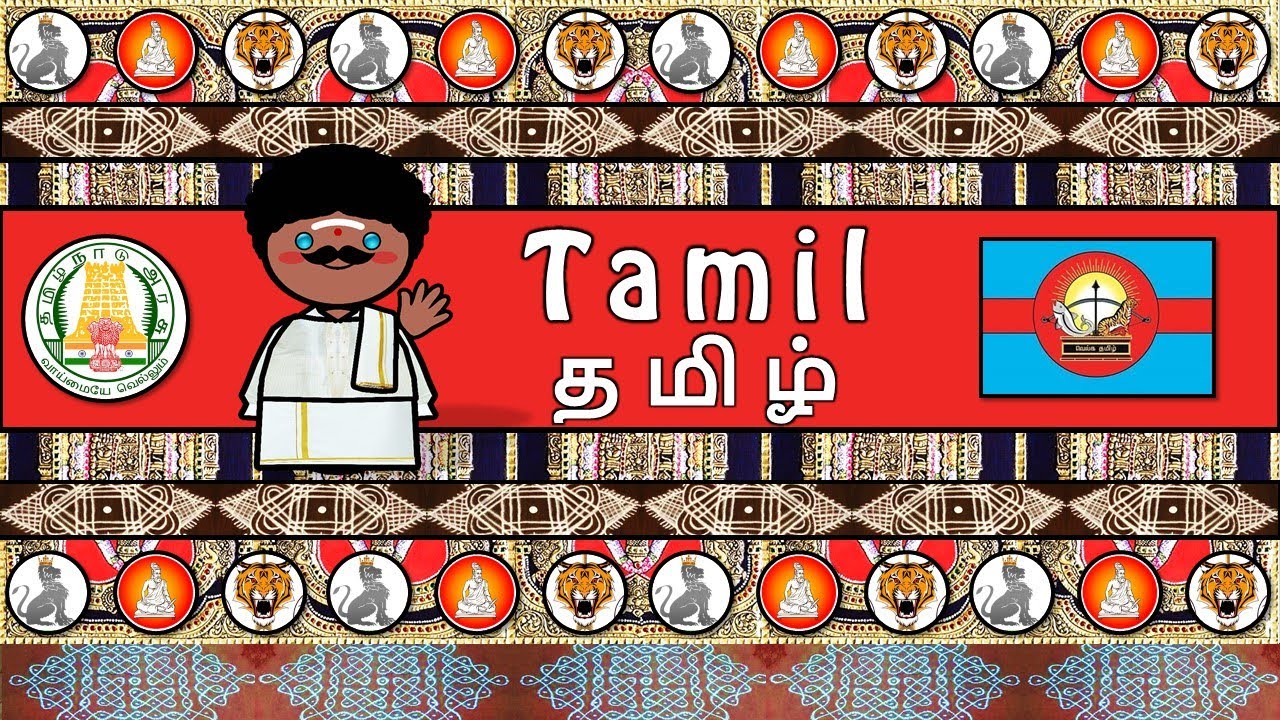
The Tamil Language: A Living Classical Tradition
Tamil is one of the world’s oldest living languages, with a rich literary heritage and a vibrant community of speakers across several continents. It is spoken by tens of millions of people and continues to thrive in homes, schools, literature, film and public life.
Origins and language family
Tamil belongs to the Dravidian language family, whose languages are spoken mainly in southern India and parts of Sri Lanka. It has a long written history, although the precise development of the language and the dating of its earliest texts remain subjects of scholarly study.
India recognised Tamil as a classical language in 2004, reflecting its ancient literary tradition and distinctive history. Early Tamil poetry, including works associated with the Sangam period, remains an important part of its cultural legacy. The Tolkāppiyam, an early work on grammar and poetics, is among the best-known texts from Tamil’s classical tradition.
Where Tamil is spoken
Tamil is the official language of the Indian state of Tamil Nadu and the Union Territory of Puducherry. It is also an official language of Sri Lanka and Singapore. Tamil-speaking communities can be found throughout the world, including in Malaysia, Mauritius, South Africa, the Gulf states, Europe, North America and Australia.
These communities have helped Tamil develop in varied settings. Regional and diaspora varieties may differ in vocabulary, pronunciation and usage, while remaining part of a shared language tradition.
The Tamil script
Tamil is written from left to right using its own script, which developed from ancient South Indian writing systems. The script represents vowels and consonants, with vowel signs combining with consonant characters to form syllabic units. Its rounded shapes are a distinctive feature of the written language.
Spoken and written Tamil
As in several languages with long literary histories, Tamil has a noticeable difference between formal written usage and everyday speech. The form used in books, official settings and formal media can differ from the varieties people use in conversation. Spoken Tamil itself varies by region and community.
This range is a strength of the language: it allows Tamil to serve many purposes, from classical poetry and scholarship to informal conversation, popular cinema and online communication.
A language in contemporary life
Tamil is not only a language of ancient literature. It is used in modern journalism, education, music, television, cinema and digital media. Tamil-language films and songs have audiences around the world, while writers continue to explore contemporary life through novels, poetry and essays.
For learners, Tamil offers an opportunity to engage with a distinctive writing system, a deep literary heritage and a lively global community. For its speakers, it remains an important means of expressing identity, culture and connection across generations.
Conclusion
Tamil brings together an ancient written tradition and a dynamic present. Its literature, regional varieties and international communities make it a language of enduring cultural significance—one that continues to grow and adapt while carrying its history forward.
Mastering Tamil: 7 Essential Tips for Beginners
- Learn the Tamil script alongside spoken words.
- Practise Tamil’s distinct vowel and consonant sounds.
- Listen to native speakers for natural rhythm.
- Start with everyday greetings and phrases.
- Notice that formal and spoken Tamil can differ.
- Use transliteration as a guide, not a substitute for the script.
- Practise a little every day to build confidence.
Learn the Tamil script alongside spoken words.
Learn the Tamil script alongside spoken words to connect how a word sounds with how it is written. Practise a few letters at a time, then use them to read familiar words and short phrases aloud. This approach can help you remember vocabulary, improve pronunciation and become more confident reading Tamil.
Practise Tamil’s distinct vowel and consonant sounds.
Practise Tamil’s distinct vowel and consonant sounds regularly, paying close attention to how your tongue and lips move. Tamil includes contrasts that may be unfamiliar to English speakers, so listen to fluent speakers, repeat words aloud and practise slowly before increasing your pace. Short, consistent sessions can help you hear and produce the sounds more clearly.
Listen to native speakers for natural rhythm.
Listen to native Tamil speakers to get a feel for the language’s natural rhythm, pronunciation and intonation. Try listening to conversations, films, songs or podcasts, and notice how speakers connect words and emphasise different parts of a sentence. Repeating short phrases aloud can help you practise the flow of Tamil and sound more natural over time.
Start with everyday greetings and phrases.
Start learning Tamil with everyday greetings and useful phrases, such as “வணக்கம்” (vaṇakkam, “hello”) and “நன்றி” (naṉṟi, “thank you”). Practising these simple expressions helps you become familiar with Tamil sounds and script, while giving you the confidence to begin short conversations. Try saying them aloud and using them in context, paying attention to pronunciation and the way people respond.
Notice that formal and spoken Tamil can differ.
Formal and spoken Tamil can differ considerably, so it helps to learn which form suits each situation. Formal Tamil is commonly used in writing, education, news and official settings, while everyday speech varies by region and community. Listening to native speakers and practising real conversations can help you recognise these differences and choose language that sounds natural and appropriate.
Use transliteration as a guide, not a substitute for the script.
When learning Tamil, use transliteration—the writing of Tamil words in the Roman alphabet—as a helpful guide to pronunciation, but not as a substitute for learning the Tamil script. Roman spellings can vary and may not capture every Tamil sound accurately, while the script shows how words are written and helps you recognise them in books, signs and everyday messages. Learning a few letters at a time alongside their sounds can make the transition easier and build confidence as you read and write.
Practise a little every day to build confidence.
Practising Tamil for a little while each day can help you build confidence and make steady progress. Try learning a few new words, reading a short passage or listening to a Tamil conversation, then practise using what you have learnt. Regular, manageable practice helps the language feel more familiar over time.