
The Urdu Language: History, Script and Living Culture
Urdu is a language with a rich literary tradition and a wide community of speakers. It is the national language of Pakistan and one of the 22 languages recognised in India’s Constitution. Urdu is also spoken by communities around the world, including in the United Kingdom, the Middle East and North America.
Origins and development
Urdu developed in the Indian subcontinent over several centuries. Its grammatical foundations are closely related to those of Hindi, and the two languages share many everyday words and features. Urdu has also drawn vocabulary from Persian and Arabic, as well as from other languages of the region. Over time, it became an important language of poetry, scholarship and public life.
Script and pronunciation
Urdu is generally written from right to left in a form of the Perso-Arabic script, most commonly in the elegant Nastaliq style. Its written appearance differs from Devanagari, used for Hindi, although speakers may understand much of one another’s everyday spoken language. Differences in vocabulary and formal registers can become more pronounced in literature, news and official settings.
A language of poetry and everyday life
Urdu is especially celebrated for its poetry, including the ghazal, a poetic form known for its lyrical expression. It is also used in conversation, education, journalism, television, film and music. From classical verse to contemporary popular culture, Urdu continues to adapt while retaining a distinctive literary heritage.
For learners, Urdu offers a way to explore the histories and cultures of South Asia and its diaspora. Its shared features with Hindi can make spoken conversation familiar, while its script and poetic traditions offer a rewarding world of their own.
Mastering Urdu: 7 Essential Tips for Beginners
- Urdu is written from right to left.
- Urdu uses a modified Perso-Arabic script.
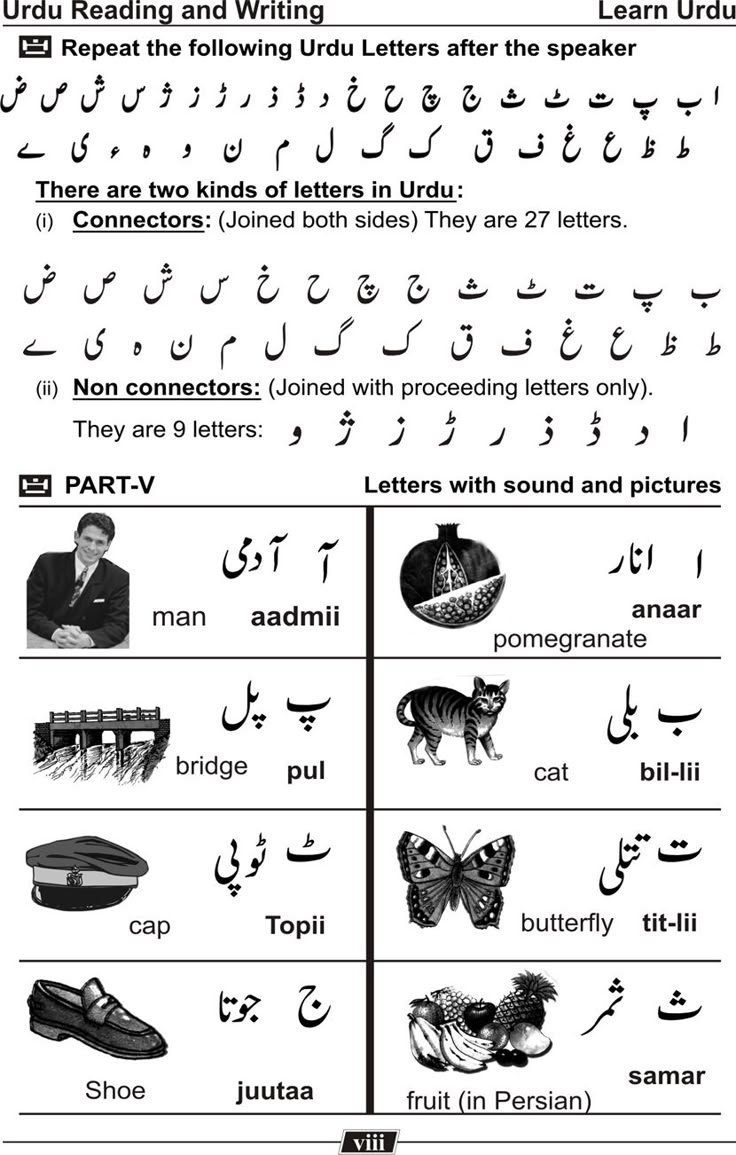
- Learn the Urdu alphabet before tackling longer texts.
- Listen to native speakers to improve pronunciation.
- Practise common greetings and everyday phrases.
- Urdu shares many words with Persian and Arabic.
- Read simple Urdu stories to build vocabulary.
Urdu is written from right to left.
Urdu is written from right to left in a script based on the Perso-Arabic alphabet, so both reading and writing begin on the right-hand side of the page. This may feel unfamiliar to learners used to left-to-right writing, but with practice the direction becomes natural. Urdu’s flowing Nastaliq script is also known for its distinctive, elegant appearance.
Urdu uses a modified Perso-Arabic script.
Urdu is written from right to left using a modified form of the Perso-Arabic script, adapted to represent the sounds of the language. Its letters often join together, and the elegant Nastaliq style is widely used in books, newspapers and other printed material. Learning the script can take practice, but it offers a striking introduction to Urdu’s rich literary tradition.
Learn the Urdu alphabet before tackling longer texts.
Learn the Urdu alphabet before tackling longer texts. Getting familiar with the letters, their different forms and the way they join together will make reading feel much less daunting. Practise recognising and writing a few characters at a time, and remember that Urdu is read from right to left. Once you can identify the letters confidently, you’ll find it easier to sound out words and build towards sentences and longer passages.
Listen to native speakers to improve pronunciation.
Listening to native Urdu speakers is an effective way to improve your pronunciation. Pay attention to how they form sounds, stress words and connect phrases in natural conversation. Urdu films, interviews, podcasts and songs can all provide useful practice. Try repeating short sentences aloud, then compare your pronunciation with the original. With regular listening and practice, you’ll become more familiar with Urdu’s rhythm and sounds.
Practise common greetings and everyday phrases.
Practise common Urdu greetings and everyday phrases to build confidence and make conversations feel more natural. Start with expressions such as “Assalāmu alaikum” (peace be upon you), “Shukriya” (thank you) and “Aap kaise hain?” (How are you?), then try using them in simple exchanges. Repeating these phrases aloud can help you become familiar with Urdu pronunciation, while practising them in context makes them easier to remember.
Urdu shares many words with Persian and Arabic.
Urdu has a rich vocabulary shaped by centuries of contact with other languages, particularly Persian and Arabic. Many words used in Urdu poetry, literature and formal speech have Persian or Arabic roots, adding distinctive layers of meaning and expression. This influence sits alongside Urdu’s South Asian foundations, making the language a fascinating blend of linguistic traditions.
Read simple Urdu stories to build vocabulary.
Reading simple Urdu stories is an enjoyable way to build your vocabulary. Start with short, accessible tales and note unfamiliar words as you go. Use the surrounding sentences to work out their meanings, then look them up and revisit them later. With regular reading, you’ll encounter useful words in context and become more confident recognising Urdu expressions and sentence patterns.