
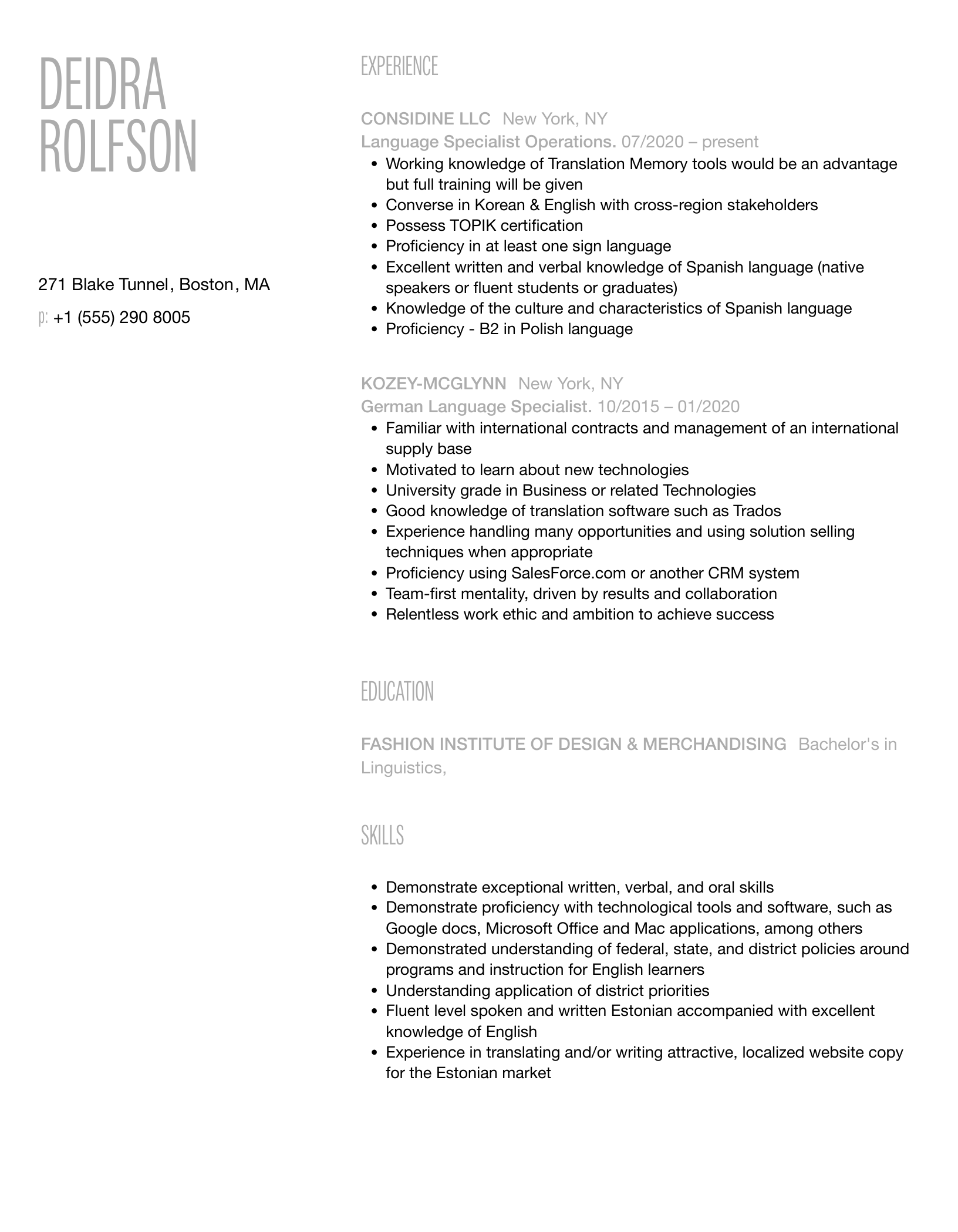
The Importance of Language Skills on Your Resume
When it comes to crafting a compelling resume, highlighting your language skills can significantly enhance your chances of landing your dream job. In today’s globalized world, employers value candidates who possess proficiency in multiple languages for various reasons.
Enhanced Communication Abilities
Language skills on your resume demonstrate that you have the ability to communicate effectively with a diverse range of people. This is particularly valuable in roles that require interaction with international clients or colleagues.
Global Opportunities
Proficiency in multiple languages opens up doors to global opportunities. Companies with an international presence often seek candidates who can bridge language barriers and facilitate smooth communication across borders.
Cultural Understanding
Language skills not only enable you to communicate in different tongues but also indicate a level of cultural understanding. This can be highly beneficial in roles that involve working with multicultural teams or serving diverse customer bases.
Competitive Advantage
In a competitive job market, showcasing language skills sets you apart from other candidates. It demonstrates your willingness to learn and adapt, as well as your commitment to personal and professional development.
How to Showcase Language Skills on Your Resume
When including language skills on your resume, be sure to specify your proficiency level (e.g., beginner, intermediate, advanced) for each language. You can also highlight any relevant certifications or experiences that demonstrate your linguistic abilities.
In conclusion, incorporating language skills into your resume is a strategic move that can significantly boost your employability and open up new career opportunities. Whether you are fluent in multiple languages or just starting to learn, showcasing your linguistic talents can make a positive impact on potential employers.
Enhancing Your CV: 9 Essential Tips for Showcasing Language Proficiency
- Use a professional tone and language throughout your resume.
- Highlight your language proficiency levels using recognised frameworks such as CEFR or ILR.
- Include specific languages you are proficient in, along with any relevant certifications or qualifications.
- Mention any experience living or working in countries where the languages are spoken.
- Showcase your ability to communicate effectively in different languages through examples or achievements.
- Tailor your language skills to the job you are applying for by emphasising relevant languages for the role.
- Avoid exaggerating your language abilities to prevent misrepresentation during interviews or assessments.
- Proofread your resume carefully to ensure there are no spelling or grammatical errors in the language sections.
- Consider including a separate section dedicated to detailing your language skills and experiences.
Use a professional tone and language throughout your resume.
Maintaining a professional tone and language throughout your resume is essential when highlighting your language skills. Employers are not only assessing your linguistic abilities but also evaluating your overall communication style and professionalism. By using clear, concise language and a formal tone, you convey a sense of credibility and attention to detail, which can leave a positive impression on potential employers. Remember, your resume serves as a reflection of your professional identity, so ensuring consistency in tone and language can enhance the effectiveness of showcasing your language skills in a compelling manner.
Highlight your language proficiency levels using recognised frameworks such as CEFR or ILR.
When crafting your language skills resume, it is advisable to highlight your proficiency levels using recognised frameworks like the Common European Framework of Reference for Languages (CEFR) or the Interagency Language Roundtable (ILR). Clearly indicating your language abilities according to these established standards provides employers with a clear understanding of your competency level in each language, making it easier for them to assess your suitability for roles that require specific language proficiencies. By aligning your language skills with recognised frameworks, you demonstrate a commitment to transparency and accuracy in representing your linguistic capabilities on your resume.
Include specific languages you are proficient in, along with any relevant certifications or qualifications.
When crafting your language skills resume, it is crucial to include specific languages in which you are proficient, along with any relevant certifications or qualifications you have obtained. Clearly stating the languages you can speak fluently and indicating your level of proficiency helps potential employers assess your communication abilities accurately. Additionally, highlighting any certifications or qualifications you have acquired demonstrates your commitment to honing your language skills and adds credibility to your proficiency claims. This detailed information not only showcases your linguistic capabilities but also enhances the overall impact of your resume, making you a more attractive candidate to prospective employers.
Mention any experience living or working in countries where the languages are spoken.
Including any experience of living or working in countries where the languages are spoken on your resume can greatly strengthen your language skills section. This demonstrates practical immersion in the language and culture, showcasing not only your ability to communicate effectively but also your adaptability and cultural awareness. Employers value firsthand experience in language-rich environments as it signifies a deeper understanding and proficiency beyond just academic study. Be sure to highlight these experiences on your resume to stand out and showcase your real-world language capabilities.
Showcase your ability to communicate effectively in different languages through examples or achievements.
To enhance the impact of your language skills on your resume, it is essential to showcase your ability to communicate effectively in different languages through concrete examples or achievements. For instance, you can highlight successful collaborations with international teams, resolving language barriers in customer interactions, or achieving language proficiency certifications. By demonstrating how you have applied your linguistic abilities in real-world situations, you not only validate your language skills but also provide tangible evidence of your communication prowess across diverse linguistic contexts.
Tailor your language skills to the job you are applying for by emphasising relevant languages for the role.
When crafting your language skills resume, it is crucial to tailor your abilities to the specific job you are applying for by highlighting the languages that are most relevant to the role. Emphasising languages that align with the requirements of the position not only demonstrates your suitability for the job but also showcases your commitment to meeting the needs of the employer. By customising your language skills to match the job description, you can effectively communicate your proficiency in languages that are directly applicable to the responsibilities and expectations of the role.
Avoid exaggerating your language abilities to prevent misrepresentation during interviews or assessments.
It is crucial to avoid exaggerating your language abilities on your resume to prevent misrepresentation during interviews or assessments. Being honest about your proficiency level in each language ensures that you are accurately assessed for roles that require specific language skills. Misrepresenting your language abilities can lead to challenges during interviews and may ultimately harm your credibility and chances of securing the job. It is always best to be transparent about your linguistic capabilities to build trust with potential employers and showcase genuine skills that align with the job requirements.
Proofread your resume carefully to ensure there are no spelling or grammatical errors in the language sections.
It is crucial to meticulously proofread your resume, particularly the language sections, to eliminate any spelling or grammatical errors. Ensuring that your language skills are accurately presented without mistakes not only demonstrates your attention to detail but also showcases your proficiency in written communication. Employers value candidates who exhibit precision and clarity in their resumes, so taking the time to review and refine the language sections can significantly enhance the overall impact of your application.
Consider including a separate section dedicated to detailing your language skills and experiences.
To enhance the visibility of your language skills on your resume, it is advisable to consider incorporating a distinct section solely focused on outlining your linguistic proficiencies and relevant experiences. By dedicating a separate area to highlight your language abilities, you can effectively showcase the depth of your communication skills and cultural understanding to potential employers. This structured approach not only emphasises the importance of language in your professional profile but also makes it easier for recruiters to identify and appreciate the value that your multilingual capabilities can bring to their organisation.