
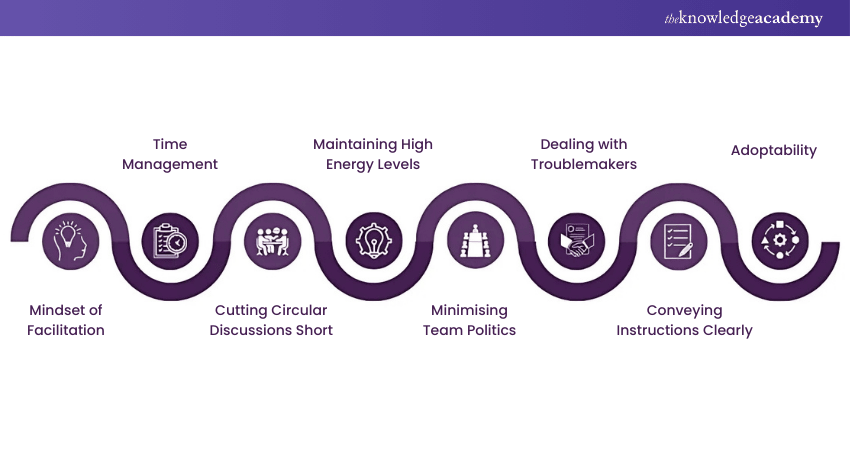
The Importance of Facilitation Skills in Today’s Workplace
Facilitation skills are crucial in today’s dynamic and collaborative work environments. Effective facilitation involves guiding group discussions, decision-making processes, and problem-solving activities to achieve desired outcomes. A skilled facilitator can help teams navigate challenges, foster creativity, and enhance productivity.
Key Facilitation Skills
Communication: Clear and concise communication is essential for a facilitator to convey ideas, instructions, and objectives effectively. Active listening skills are also vital to understand participants’ perspectives and encourage open dialogue.
Conflict Resolution: Facilitators must be adept at managing conflicts that may arise during discussions or decision-making processes. By remaining neutral and impartial, they can help resolve disagreements constructively and maintain a positive atmosphere.
Adaptability: Flexibility is key for facilitators to adjust their approach based on the group dynamics, goals, and challenges encountered during facilitation sessions. Being able to pivot when necessary ensures that the process remains on track.
The Benefits of Strong Facilitation Skills
Improved Collaboration: Skilful facilitation promotes collaboration among team members by encouraging active participation, sharing of ideas, and collective problem-solving. This leads to innovative solutions and stronger team cohesion.
Enhanced Decision Making: Facilitators guide groups through decision-making processes by providing structure, clarifying objectives, and ensuring all perspectives are considered. This results in well-informed decisions that align with organisational goals.
Increased Productivity: Effective facilitation streamlines meetings and discussions by keeping participants focused on the agenda, managing time efficiently, and driving towards actionable outcomes. This optimises productivity and reduces wasted time.
Cultivating Facilitation Skills
Developing strong facilitation skills requires practice, feedback, and continuous learning. Professionals can attend workshops, courses, or seminars focused on facilitation techniques to hone their abilities. Additionally, seeking mentorship from experienced facilitators can provide valuable insights and guidance.
In conclusion, mastering facilitation skills is a valuable asset for individuals seeking to excel in collaborative work environments. By fostering effective communication, conflict resolution, adaptability, collaboration, decision-making abilities, professionals can elevate their impact as facilitators and contribute positively to team dynamics and organisational success.
Enhancing Workplace Dynamics: Key FAQs on Developing Facilitation Skills
- What are facilitation skills?
- Why are facilitation skills important in the workplace?
- How can I improve my facilitation skills?
- What are the key qualities of an effective facilitator?
- How can facilitation skills enhance team collaboration?
- What role does active listening play in effective facilitation?
- How can a facilitator manage conflicts during group discussions?
- What training opportunities are available to develop facilitation skills?
- In what ways can strong facilitation skills benefit organisational outcomes?
What are facilitation skills?
Facilitation skills encompass a set of abilities and techniques that enable an individual to guide group interactions, discussions, and decision-making processes effectively. A skilled facilitator acts as a neutral mediator, fostering open communication, encouraging participation, managing conflicts constructively, and ensuring that meetings or workshops achieve their intended objectives. These skills involve clear communication, active listening, adaptability to group dynamics, and the ability to facilitate consensus-building among participants. Ultimately, facilitation skills are instrumental in creating a collaborative environment where diverse perspectives are valued, ideas are shared freely, and collective goals are achieved efficiently.
Why are facilitation skills important in the workplace?
Facilitation skills play a vital role in the workplace as they enable effective communication, collaboration, and decision-making among team members. A skilled facilitator can create a conducive environment for open dialogue, idea sharing, and problem-solving, leading to improved productivity and innovation. By guiding discussions and ensuring all voices are heard, facilitation skills help teams navigate challenges, resolve conflicts constructively, and reach consensus efficiently. Ultimately, strong facilitation skills contribute to a positive work culture, enhanced teamwork, and the achievement of organisational goals in a dynamic and fast-paced business environment.
How can I improve my facilitation skills?
To enhance your facilitation skills, consider engaging in continuous learning and practice. Attend workshops or training sessions focused on facilitation techniques to acquire new tools and strategies. Seek feedback from peers or mentors to identify areas for improvement and refine your approach. Practice facilitation in various settings to gain experience and adaptability. Additionally, actively listen to participants, foster open communication, and remain neutral during discussions to create a supportive and inclusive environment. By investing time and effort into developing your facilitation skills, you can become a more effective facilitator and positively impact group dynamics and outcomes.
What are the key qualities of an effective facilitator?
When considering the key qualities of an effective facilitator, several traits stand out as essential for success in guiding group discussions and activities. Clear communication skills are paramount, enabling facilitators to convey ideas, instructions, and objectives with precision while actively listening to participants’ viewpoints. Neutrality and impartiality in conflict resolution are crucial, allowing facilitators to address disagreements constructively and maintain a positive environment. Adaptability is also key, as it enables facilitators to adjust their approach based on group dynamics and challenges encountered during sessions. Ultimately, a combination of communication prowess, conflict resolution abilities, and adaptability forms the foundation for effective facilitation in diverse settings.
How can facilitation skills enhance team collaboration?
Facilitation skills play a pivotal role in enhancing team collaboration by fostering an environment where every team member’s voice is heard, ideas are shared openly, and consensus is reached effectively. A skilled facilitator can guide discussions, encourage active participation, and ensure that all perspectives are considered during decision-making processes. By promoting clear communication, managing conflicts constructively, and maintaining focus on the team’s objectives, facilitation skills create a space for collaboration to flourish. Ultimately, the ability to facilitate effectively empowers teams to work cohesively towards common goals, leverage diverse talents and expertise, and achieve optimal outcomes through collective efforts.
What role does active listening play in effective facilitation?
Active listening plays a crucial role in effective facilitation as it is the foundation of understanding and communication. By actively listening to participants during discussions, a facilitator demonstrates respect, empathy, and attentiveness, creating a safe and inclusive environment for open dialogue. Through active listening, facilitators can grasp the nuances of participants’ perspectives, uncover underlying issues, and guide conversations towards meaningful outcomes. This skill not only fosters trust and engagement within the group but also enables facilitators to address conflicts constructively and ensure that all voices are heard and valued. Ultimately, active listening enhances the facilitation process by promoting collaboration, building rapport, and driving towards successful results.
How can a facilitator manage conflicts during group discussions?
In the context of group discussions, managing conflicts is a common challenge that facilitators face. A skilled facilitator can navigate conflicts by remaining neutral, actively listening to all perspectives, and guiding the group towards constructive resolutions. By acknowledging differing viewpoints, encouraging open dialogue, and setting ground rules for respectful communication, a facilitator can create a safe space for addressing conflicts effectively. Additionally, techniques such as summarising key points, reframing issues positively, and mediating discussions can help de-escalate tensions and foster a collaborative environment where all participants feel heard and valued.
What training opportunities are available to develop facilitation skills?
For individuals seeking to enhance their facilitation skills, a variety of training opportunities are readily available. Many professional development programmes, workshops, and online courses focus specifically on equipping participants with the necessary tools and techniques to become effective facilitators. These training opportunities often cover topics such as communication strategies, conflict resolution techniques, group dynamics understanding, and facilitation best practices. Additionally, organisations may offer in-house training sessions or bring in external facilitation experts to conduct tailored workshops for their employees. By taking advantage of these diverse training options, individuals can cultivate their facilitation skills and excel in guiding productive discussions and collaborative processes.
In what ways can strong facilitation skills benefit organisational outcomes?
Strong facilitation skills can significantly benefit organisational outcomes in several key ways. Firstly, by fostering effective communication and collaboration among team members, skilled facilitators can enhance decision-making processes, leading to more informed and strategic choices that align with the organisation’s goals. Additionally, strong facilitation skills can improve productivity by streamlining meetings and discussions, ensuring that time is used efficiently and that actionable outcomes are achieved. Moreover, adept facilitators can help manage conflicts constructively, leading to a positive work environment where challenges are addressed effectively, ultimately contributing to improved team cohesion and performance.