
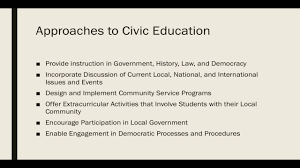
The Importance of Civic Education
Civic education plays a crucial role in shaping responsible and informed citizens who actively participate in their communities and contribute to the betterment of society. It encompasses a range of knowledge, skills, and values that are essential for individuals to understand their rights and responsibilities as members of a democratic society.
One of the key aspects of civic education is teaching individuals about the structures and functions of government, as well as the principles of democracy and rule of law. By understanding how government works and the importance of upholding democratic values, citizens are better equipped to engage in the political process and hold their representatives accountable.
Furthermore, civic education promotes critical thinking, communication skills, and empathy – qualities that are essential for effective citizenship. It encourages individuals to consider different perspectives, engage in civil discourse, and work towards common goals for the greater good.
Through civic education, individuals also learn about social justice issues, human rights, and the importance of diversity and inclusion. This helps foster a sense of solidarity and respect for all members of society, regardless of their background or beliefs.
In an increasingly interconnected world where global challenges require collective action, civic education is more important than ever. By empowering individuals with the knowledge and skills to actively participate in civic life, we can create a more just, inclusive, and sustainable society for future generations.
Therefore, investing in civic education is not only an investment in individual citizens but also in the overall well-being of our communities and democracy as a whole.
Enhancing Society: The Benefits of Civic Education in Fostering Active Citizenship and Social Justice
- Promotes active citizenship and civic engagement
- Empowers individuals to understand their rights and responsibilities
- Fosters critical thinking and decision-making skills
- Encourages respect for diversity and social inclusion
- Strengthens democracy by promoting informed participation in the political process
- Helps create a more just and equitable society through advocacy and civic action
Challenges and Criticisms of Civic Education: Bias, Inconsistency, and Resource Demands
- Civic education may be perceived as biased or promoting a specific political agenda, leading to controversy and divisiveness.
- The content of civic education programs can vary widely, resulting in inconsistencies in the knowledge and skills acquired by students.
- Some individuals may view civic education as unnecessary or irrelevant to their daily lives, diminishing its impact and effectiveness.
- Implementing comprehensive civic education initiatives requires significant resources and funding, which may pose challenges for cash-strapped educational systems.
- There is a risk that civic education could be used as a tool for indoctrination rather than fostering critical thinking and independent decision-making.
Promotes active citizenship and civic engagement
Promoting active citizenship and civic engagement is a significant pro of civic education. By educating individuals about their rights, responsibilities, and the importance of participating in community affairs, civic education empowers citizens to take an active role in shaping the society they live in. Through fostering a sense of responsibility towards the common good and encouraging involvement in decision-making processes, civic education cultivates a culture of civic engagement that is vital for a thriving democracy. Active citizenship not only strengthens communities but also ensures that diverse voices are heard and valued, leading to more inclusive and equitable societies.
Empowers individuals to understand their rights and responsibilities
Empowering individuals to understand their rights and responsibilities is a fundamental benefit of civic education. By equipping people with knowledge about the laws, principles of democracy, and their role in society, civic education enables them to make informed decisions, advocate for their rights, and actively engage in shaping the community around them. This understanding not only strengthens individual agency but also fosters a sense of accountability and civic duty, leading to a more engaged and responsible citizenry that contributes positively to the functioning of a democratic society.
Fosters critical thinking and decision-making skills
Civic education, by fostering critical thinking and decision-making skills, empowers individuals to analyse information, evaluate different perspectives, and make informed choices that align with their values and the common good. This ability to think critically and make reasoned decisions not only benefits the individual in their personal life but also equips them to actively engage in civic affairs, contribute meaningfully to public discourse, and participate constructively in the democratic process.
Encourages respect for diversity and social inclusion
Civic education plays a pivotal role in promoting respect for diversity and social inclusion by fostering an understanding of different cultures, perspectives, and experiences. Through education on the value of inclusivity, individuals learn to appreciate the richness that diversity brings to society and recognise the importance of creating a welcoming environment for all members of the community. By instilling empathy and respect for others, civic education helps build bridges across social divides and cultivates a sense of unity that transcends differences, ultimately leading to a more harmonious and cohesive society.
Strengthens democracy by promoting informed participation in the political process
Civic education serves as a vital pillar in strengthening democracy by fostering informed participation in the political process. By equipping individuals with knowledge about government structures, democratic principles, and civic rights and responsibilities, civic education empowers citizens to make well-informed decisions when engaging in elections, advocacy efforts, and policy discussions. This informed participation not only enhances the quality of democratic governance but also ensures that diverse voices are heard and considered in shaping policies that reflect the needs and values of society as a whole.
Helps create a more just and equitable society through advocacy and civic action
Civic education plays a vital role in fostering a more just and equitable society by empowering individuals to engage in advocacy and civic action. By educating citizens about their rights, the importance of social justice, and the value of active participation in community affairs, civic education encourages people to stand up for equality and fairness. Through informed advocacy and civic action, individuals can work towards addressing systemic injustices, promoting inclusivity, and advocating for policies that benefit all members of society. This proactive approach not only helps create a more just society but also strengthens the foundations of democracy by ensuring that every voice is heard and every individual is treated with dignity and respect.
Civic education may be perceived as biased or promoting a specific political agenda, leading to controversy and divisiveness.
Civic education, despite its noble intentions, can sometimes be perceived as biased or promoting a particular political agenda. This perception can lead to controversy and divisiveness within communities, as individuals may feel that certain viewpoints are being favoured over others. When civic education is not presented in a balanced and objective manner, it runs the risk of alienating individuals who hold different beliefs or ideologies, ultimately hindering the goal of fostering informed and engaged citizens. It is essential for civic education programmes to strive for neutrality and inclusivity to avoid exacerbating political tensions and instead encourage open dialogue and understanding among diverse groups.
The content of civic education programs can vary widely, resulting in inconsistencies in the knowledge and skills acquired by students.
One significant drawback of civic education is the inconsistency in the content of programs, leading to varying levels of knowledge and skills among students. Due to the lack of standardization, different educational institutions may cover different topics or emphasize certain aspects of civic education over others. This disparity can result in gaps in students’ understanding of important civic concepts and principles, ultimately hindering their ability to fully engage as informed and active citizens in society. Efforts to address this con should focus on developing more standardized and comprehensive civic education curricula to ensure that all students receive a consistent and thorough grounding in essential civic knowledge and skills.
Some individuals may view civic education as unnecessary or irrelevant to their daily lives, diminishing its impact and effectiveness.
Some individuals may perceive civic education as unnecessary or irrelevant to their daily lives, which can diminish its impact and effectiveness. This lack of interest or value placed on civic education may result in apathy towards civic responsibilities and a disconnection from the broader societal issues that affect communities. Without a solid understanding of the importance of civic engagement, these individuals may not fully appreciate the role they can play in shaping policies, advocating for change, and contributing to the common good. As a consequence, overlooking the significance of civic education can lead to a less informed and engaged citizenry, potentially hindering the progress of democratic societies.
Implementing comprehensive civic education initiatives requires significant resources and funding, which may pose challenges for cash-strapped educational systems.
Implementing comprehensive civic education initiatives poses a significant challenge for cash-strapped educational systems due to the substantial resources and funding required. The cost of developing and maintaining robust civic education programmes, training teachers, creating educational materials, and organising community engagement activities can place a strain on limited budgets. As a result, schools and educational institutions may struggle to allocate sufficient resources to adequately support civic education efforts, potentially hindering the development of well-rounded citizens equipped with the necessary knowledge and skills to actively participate in democratic processes.
There is a risk that civic education could be used as a tool for indoctrination rather than fostering critical thinking and independent decision-making.
There is a legitimate concern that civic education could potentially be exploited as a means of indoctrination rather than serving its intended purpose of nurturing critical thinking and independent decision-making skills. When educational content is influenced by a particular agenda or ideology, there is a risk that individuals may be steered towards accepting certain beliefs without questioning or evaluating them critically. This can undermine the fundamental goal of civic education, which should be to empower individuals to think for themselves, engage in reasoned debate, and make informed choices based on evidence and diverse perspectives. It is essential for educators and policymakers to remain vigilant against any attempts to misuse civic education for propagandistic purposes and instead uphold the principles of intellectual freedom and open-minded inquiry.