
Types of Negotiation Skills
Negotiation is a crucial aspect of both personal and professional life. It involves reaching an agreement through communication and compromise. Different situations call for different negotiation skills. Here are some common types of negotiation skills:
Collaborative Negotiation
In collaborative negotiation, both parties work together to find a mutually beneficial solution. This approach focuses on building relationships, trust, and understanding the needs and interests of all parties involved.
Competitive Negotiation
Competitive negotiation involves a more assertive and competitive approach. This type of negotiation is often used when one party aims to maximise their own benefits without much regard for the other party’s interests. It requires strong persuasion and strategic thinking.
Compromising Negotiation
Compromising negotiation involves finding a middle ground where both parties make concessions to reach an agreement. This approach requires flexibility, willingness to give up certain demands, and focus on achieving a balanced outcome.
Avoiding Negotiation
Sometimes, avoiding negotiation altogether may be the best approach if the situation is not conducive to reaching a mutually beneficial agreement or if it could potentially harm relationships between parties.
Accommodating Negotiation
In accommodating negotiation, one party prioritises the needs and interests of the other party over their own. This approach is useful in maintaining relationships, building trust, and showing goodwill towards the other party.
Developing proficiency in various types of negotiation skills can help individuals navigate different situations effectively and achieve successful outcomes through effective communication, problem-solving, and relationship-building.
Mastering Negotiation: 7 Essential Skills for Effective Outcomes
- Active listening – Focus on understanding the other party’s perspective.
- Communication skills – Clearly convey your thoughts and actively engage in discussions.
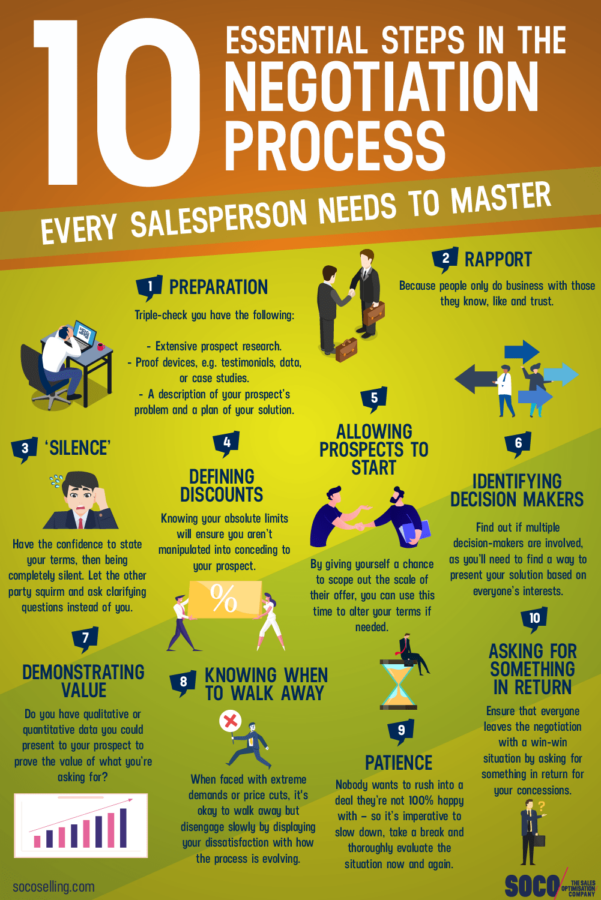
- Preparation – Research the subject matter and anticipate potential scenarios.
- Flexibility – Be open to exploring different solutions and compromises.
- Emotional intelligence – Manage emotions effectively and empathize with the other party.
- Problem-solving – Collaborate to find mutually beneficial outcomes.
- Assertiveness – Advocate for your interests while respecting the interests of others.
Active listening – Focus on understanding the other party’s perspective.
Active listening is a vital tip when it comes to honing negotiation skills. By actively listening and focusing on understanding the other party’s perspective, negotiators can gain valuable insights into their needs, motivations, and concerns. This approach not only demonstrates respect and empathy but also allows for better communication and the building of trust during negotiations. Understanding the other party’s viewpoint can lead to more creative solutions and mutually beneficial agreements, making active listening an essential skill in successful negotiation strategies.
Communication skills – Clearly convey your thoughts and actively engage in discussions.
Effective communication is a fundamental aspect of negotiation skills. It is essential to clearly articulate your thoughts and actively participate in discussions to ensure that your message is understood and your perspective is heard. By engaging in open and transparent communication, you can build rapport with the other party, establish mutual understanding, and work towards finding a mutually beneficial solution. Strong communication skills not only help in conveying your ideas effectively but also in actively listening to the other party’s viewpoints, fostering collaboration, and ultimately reaching successful negotiation outcomes.
Preparation – Research the subject matter and anticipate potential scenarios.
Preparation is a key tip when it comes to honing negotiation skills. By conducting thorough research on the subject matter and anticipating potential scenarios, individuals can enter negotiations with confidence and clarity. Understanding the background information and being prepared for different outcomes allows negotiators to adapt their strategies accordingly, leading to more effective communication and successful agreements. This proactive approach not only demonstrates professionalism but also enhances the ability to navigate complex negotiations with poise and strategic thinking.
Flexibility – Be open to exploring different solutions and compromises.
Flexibility is a key aspect of effective negotiation skills. Being open to exploring different solutions and compromises allows individuals to adapt to changing circumstances and find creative ways to reach agreements that satisfy all parties involved. By demonstrating flexibility during negotiations, individuals can show their willingness to consider various options and work towards finding a mutually beneficial resolution. This approach not only fosters collaboration but also helps build trust and strengthen relationships, ultimately leading to successful outcomes in negotiations.
Emotional intelligence – Manage emotions effectively and empathize with the other party.
Effective negotiation skills often involve the ability to manage emotions and empathise with the other party, a concept known as emotional intelligence. By understanding and controlling one’s own emotions during negotiations, individuals can maintain composure, think rationally, and make informed decisions. Moreover, showing empathy towards the emotions and perspectives of the other party can foster trust, open communication channels, and lead to more collaborative and successful outcomes in negotiations. Emotional intelligence plays a crucial role in building strong relationships and achieving mutually beneficial agreements.
Problem-solving – Collaborate to find mutually beneficial outcomes.
In negotiation, problem-solving is a valuable skill that involves collaborating with the other party to identify and address issues in a mutually beneficial way. By working together to understand each other’s perspectives, interests, and needs, negotiators can find creative solutions that satisfy both sides. This approach fosters trust, promotes open communication, and paves the way for long-term positive relationships. Effective problem-solving in negotiation not only leads to successful outcomes but also lays the foundation for future cooperation and collaboration.
Assertiveness – Advocate for your interests while respecting the interests of others.
When it comes to negotiation skills, assertiveness plays a crucial role in advocating for your interests while also respecting the interests of others. Being assertive means confidently expressing your needs and priorities without disregarding or belittling the concerns of the other party. By striking a balance between standing up for what you believe is important and showing empathy towards the perspectives of others, you can foster a constructive negotiation environment that is conducive to reaching mutually beneficial agreements. Mastering assertiveness in negotiations can lead to more effective communication, better problem-solving, and ultimately, successful outcomes for all parties involved.