
Examples of Good Communication Skills
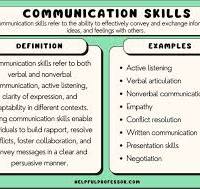
Effective communication skills are essential in both personal and professional settings. Being able to convey your thoughts and ideas clearly can lead to better relationships, increased productivity, and overall success. Here are some examples of good communication skills that can help you excel in various aspects of life:
Active Listening
One of the most important communication skills is active listening. This involves fully concentrating on what the other person is saying, understanding their message, and responding appropriately. By being an active listener, you show respect and empathy towards the speaker.
Clarity and Conciseness
Communicating clearly and concisely is crucial in getting your message across effectively. Avoid using jargon or overly complex language, and strive to be as clear and straightforward as possible. This helps prevent misunderstandings and ensures that your message is easily understood.
Non-Verbal Communication
Non-verbal cues such as facial expressions, body language, and tone of voice play a significant role in communication. Being mindful of your non-verbal signals can help convey your message more effectively and enhance understanding between you and the other person.
Empathy
Empathy is the ability to understand and share the feelings of another person. By showing empathy in your communication, you demonstrate that you care about the other person’s perspective and emotions. This can foster trust, build stronger relationships, and resolve conflicts more effectively.
Assertiveness
Being assertive means expressing your thoughts, feelings, and needs in a confident yet respectful manner. Assertive communication allows you to stand up for yourself while also considering the rights of others. It helps establish boundaries, resolve conflicts constructively, and build self-confidence.
In conclusion, developing good communication skills is essential for success in all areas of life. By practising active listening, clarity in speech, awareness of non-verbal cues, empathy towards others, and assertiveness in expressing yourself, you can enhance your relationships, boost your career prospects, and lead a more fulfilling life.
Essential Insights: Exploring Examples and Benefits of Good Communication Skills
- What are examples of good communication skills?
- How can active listening improve communication?
- Why is clarity important in communication?
- What role does non-verbal communication play in effective communication?
- How does empathy enhance communication skills?
- What is assertive communication and why is it important?
- Can you provide examples of active listening in practice?
- How can I improve my clarity and conciseness in communication?
- What are the benefits of developing good communication skills?
What are examples of good communication skills?
When exploring examples of good communication skills, it is important to consider various aspects that contribute to effective communication. Active listening, clarity in speech, awareness of non-verbal cues, empathy towards others, and assertiveness in expressing oneself are key examples of good communication skills. By actively engaging in conversations, speaking clearly and concisely, paying attention to non-verbal signals, showing understanding of others’ emotions, and confidently asserting one’s thoughts and needs, individuals can enhance their communication abilities and foster better relationships in both personal and professional settings.
How can active listening improve communication?
Active listening plays a crucial role in enhancing communication by fostering understanding and empathy between individuals. When practising active listening, one fully engages with the speaker, pays attention to both verbal and non-verbal cues, and strives to comprehend the message being conveyed. By demonstrating genuine interest and respect for the speaker’s perspective, active listening creates a supportive environment that encourages open dialogue and mutual trust. This leads to clearer communication, reduced misunderstandings, and stronger relationships built on empathy and effective communication.
Why is clarity important in communication?
Clarity is crucial in communication as it ensures that your message is easily understood by the recipient. When you communicate with clarity, you reduce the risk of misunderstandings and confusion, leading to more effective and efficient interactions. Clear communication helps convey your thoughts and ideas accurately, allowing others to grasp the intended meaning without ambiguity. Whether in personal relationships or professional settings, clarity fosters better understanding, builds trust, and enhances overall communication effectiveness. By prioritising clarity in your communication, you can establish stronger connections, avoid misinterpretations, and achieve successful outcomes in various interactions.
What role does non-verbal communication play in effective communication?
Non-verbal communication plays a crucial role in effective communication by conveying messages beyond words. It includes facial expressions, gestures, body language, tone of voice, and eye contact. These non-verbal cues can significantly impact how a message is received and understood. For example, a smile can indicate friendliness and openness, while crossed arms may signal defensiveness or disagreement. Being aware of and using non-verbal communication effectively can enhance the clarity and sincerity of your message, strengthen relationships, and foster better understanding between individuals. In essence, non-verbal communication acts as a powerful complement to verbal communication, enriching interactions and creating a more holistic communication experience.
How does empathy enhance communication skills?
Empathy plays a crucial role in enhancing communication skills by allowing individuals to understand and resonate with the emotions and perspectives of others. When someone demonstrates empathy in their communication, they show genuine care and concern for the feelings and experiences of the person they are interacting with. This deep level of understanding helps to build trust, strengthen relationships, and foster a sense of connection between individuals. By incorporating empathy into their communication approach, individuals can create a supportive and inclusive environment where everyone feels heard, valued, and respected.
What is assertive communication and why is it important?
Assertive communication is a key aspect of effective interpersonal interaction that involves expressing one’s thoughts, feelings, and needs in a clear and confident manner while respecting the rights of others. It is important because it allows individuals to communicate their boundaries, opinions, and desires without being passive or aggressive. Assertive communication promotes mutual understanding, builds self-confidence, fosters healthy relationships, and helps in resolving conflicts constructively. By being assertive, individuals can assert themselves in a respectful way, stand up for their rights, and enhance their overall communication skills for better outcomes in various personal and professional situations.
Can you provide examples of active listening in practice?
When it comes to demonstrating active listening in practice, there are several examples that showcase this essential communication skill. One common example is maintaining eye contact with the speaker while nodding or providing verbal cues to show that you are engaged and attentive. Another example is paraphrasing or summarising the speaker’s message to ensure understanding and demonstrate that you are actively processing the information. Additionally, asking clarifying questions or seeking further elaboration on key points shows that you are genuinely interested in what the speaker has to say. These examples of active listening not only enhance communication effectiveness but also foster stronger connections and mutual understanding between individuals.
How can I improve my clarity and conciseness in communication?
To enhance clarity and conciseness in communication, it is essential to focus on simplifying your message and eliminating unnecessary details. Start by organising your thoughts before speaking or writing, ensuring that your main points are clear and well-defined. Use straightforward language and avoid unnecessary jargon or complex terms that may confuse your audience. Additionally, practice summarising information effectively to convey key points concisely. By being mindful of the clarity and brevity of your communication, you can improve understanding and engagement with your audience.
What are the benefits of developing good communication skills?
Developing good communication skills offers a multitude of benefits across various aspects of life. Firstly, effective communication enhances relationships by fostering understanding, trust, and respect between individuals. It also promotes teamwork and collaboration in professional settings, leading to increased productivity and successful outcomes. Good communication skills can help resolve conflicts more constructively, as well as prevent misunderstandings and misinterpretations. Additionally, mastering communication can boost one’s self-confidence and assertiveness, enabling individuals to express their thoughts and ideas with clarity and conviction. Overall, the benefits of developing good communication skills extend to personal growth, career advancement, and overall well-being.