
The Importance of Hard Skills and Soft Skills in Today’s Workplace
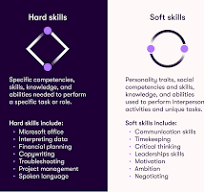
In the modern workplace, having a combination of hard skills and soft skills is essential for success and career advancement. While hard skills refer to technical abilities and knowledge specific to a certain job or industry, soft skills encompass personal attributes that enable individuals to work well with others and navigate various professional situations.
Hard Skills
Hard skills are quantifiable and teachable abilities that are typically acquired through education, training, or experience. These skills are specific to a particular role and often include proficiency in areas such as programming languages, data analysis, project management, or engineering. Employers value hard skills as they demonstrate an individual’s capability to perform tasks efficiently and effectively.
Soft Skills
Soft skills, on the other hand, are interpersonal attributes that enable individuals to communicate effectively, collaborate with others, and adapt to changing environments. Examples of soft skills include communication, teamwork, problem-solving, leadership, time management, and emotional intelligence. These skills are crucial for building relationships with colleagues, clients, and stakeholders.
The Balance Between Hard Skills and Soft Skills
While hard skills are important for carrying out specific job duties, soft skills play a vital role in how individuals interact with others in the workplace. Employers increasingly recognise the value of employees who possess a balance of both hard and soft skills. A candidate with strong technical expertise but lacking in communication or teamwork abilities may struggle to collaborate effectively within a team environment.
Developing Your Skill Set
To thrive in today’s competitive job market, it is crucial to continuously develop both your hard and soft skill sets. This can be achieved through formal education programmes, on-the-job training opportunities, workshops, networking events, or online courses. By investing in your professional development, you can enhance your employability and open up new career opportunities.
Conclusion
In conclusion, the combination of hard skills and soft skills is key to achieving success in the modern workplace. By honing your technical expertise while also cultivating your interpersonal abilities, you can position yourself as a well-rounded professional capable of excelling in diverse roles and environments.
Balancing Expertise and Interpersonal Abilities: The Importance of Hard and Soft Skills in the Workplace
- 1. Hard skills are specific and measurable, making them essential for performing technical tasks effectively.
- 2. Acquiring hard skills through education and training demonstrates a candidate’s expertise in a particular field.
- 3. Employers value hard skills as they contribute directly to productivity and task completion within the workplace.
- 1. Soft skills such as communication and teamwork are crucial for building strong relationships with colleagues and clients.
- 2. Individuals with strong soft skills tend to be more adaptable and effective in diverse work environments.
- 3. Developing soft skills enhances leadership abilities and emotional intelligence, leading to better conflict resolution.
Balancing Act: Navigating the Challenges of Hard and Soft Skills in Modern Workplaces
- Hard skills may become outdated quickly in fast-evolving industries, requiring constant upskilling.
- Soft skills are often harder to quantify and measure compared to hard skills, making them challenging to assess during recruitment processes.
- Overemphasis on hard skills may lead to a lack of focus on developing essential soft skills, hindering effective teamwork and communication within organisations.
- Individuals with strong hard skills but lacking in soft skills may struggle to adapt to dynamic work environments and build meaningful relationships with colleagues.
1. Hard skills are specific and measurable, making them essential for performing technical tasks effectively.
Hard skills are specific and measurable, making them essential for performing technical tasks effectively. These quantifiable abilities, such as proficiency in programming languages or data analysis, provide individuals with the necessary expertise to excel in their respective roles. By possessing strong hard skills, individuals can demonstrate their competency and efficiency in carrying out job duties that require technical knowledge and precision. Employers value hard skills as they ensure that tasks are completed accurately and proficiently, contributing to overall productivity and success in the workplace.
2. Acquiring hard skills through education and training demonstrates a candidate’s expertise in a particular field.
Acquiring hard skills through education and training demonstrates a candidate’s expertise in a particular field. By investing time and effort in developing technical abilities, individuals showcase their dedication to mastering the specific knowledge and competencies required for a role. Employers value candidates who possess a strong foundation of hard skills as it indicates their capability to perform tasks efficiently and contribute effectively to the organisation. Demonstrating expertise in a particular field through acquired hard skills can set candidates apart in competitive job markets and enhance their credibility as professionals.
3. Employers value hard skills as they contribute directly to productivity and task completion within the workplace.
Employers highly value hard skills due to their direct contribution to productivity and task completion in the workplace. Proficiency in specific technical abilities enables employees to efficiently carry out job responsibilities, meet deadlines, and deliver high-quality results. By possessing strong hard skills, individuals can effectively tackle complex tasks, troubleshoot issues, and drive performance improvements within their respective roles. This emphasis on hard skills underscores their significance in enhancing overall productivity and operational efficiency within organisations.
1. Soft skills such as communication and teamwork are crucial for building strong relationships with colleagues and clients.
Soft skills such as communication and teamwork play a vital role in fostering strong relationships with colleagues and clients. Effective communication enables individuals to convey ideas clearly, listen actively, and resolve conflicts diplomatically, leading to a harmonious work environment. Additionally, strong teamwork skills allow individuals to collaborate seamlessly with others, share responsibilities, and achieve common goals efficiently. By honing these soft skills, professionals can build trust, enhance collaboration, and establish lasting connections that are essential for success in the workplace.
2. Individuals with strong soft skills tend to be more adaptable and effective in diverse work environments.
Individuals with strong soft skills tend to be more adaptable and effective in diverse work environments. Their ability to communicate effectively, collaborate with others, and demonstrate emotional intelligence allows them to navigate various professional situations with ease. In today’s rapidly changing workplace landscape, where flexibility and teamwork are highly valued, individuals with well-developed soft skills can thrive in different roles and industries, contributing positively to team dynamics and overall organisational success.
3. Developing soft skills enhances leadership abilities and emotional intelligence, leading to better conflict resolution.
Developing soft skills, such as communication, empathy, and emotional intelligence, plays a crucial role in enhancing leadership abilities and fostering better conflict resolution in professional settings. By honing these interpersonal skills, individuals can effectively navigate challenging situations, understand different perspectives, and communicate constructively with colleagues or team members. Strong emotional intelligence enables leaders to manage conflicts with empathy and tact, ultimately fostering a positive work environment where issues can be addressed openly and resolved efficiently. Investing in the development of soft skills not only enhances one’s leadership capabilities but also contributes to building stronger relationships and promoting a harmonious workplace culture.
Hard skills may become outdated quickly in fast-evolving industries, requiring constant upskilling.
In fast-evolving industries, one significant drawback of relying solely on hard skills is the risk of rapid obsolescence. Hard skills, which are often specific to certain technologies or processes, may become outdated quickly as new advancements emerge. This constant evolution necessitates a continuous cycle of upskilling and retraining to stay relevant in the industry. Individuals who predominantly focus on acquiring hard skills without developing complementary soft skills may find themselves struggling to adapt to changing demands and technological shifts, highlighting the importance of cultivating a versatile skill set that includes both technical expertise and interpersonal capabilities.
Soft skills are often harder to quantify and measure compared to hard skills, making them challenging to assess during recruitment processes.
Soft skills are often harder to quantify and measure compared to hard skills, making them challenging to assess during recruitment processes. While hard skills can be easily evaluated through assessments or tests, soft skills such as communication, emotional intelligence, and leadership are more subjective and require a deeper understanding of an individual’s behaviour and interactions. This lack of concrete metrics for soft skills can make it difficult for recruiters to accurately gauge a candidate’s suitability for a role solely based on their interpersonal abilities. As a result, organisations may struggle to identify candidates who possess the necessary combination of hard and soft skills required to excel in a specific role.
Overemphasis on hard skills may lead to a lack of focus on developing essential soft skills, hindering effective teamwork and communication within organisations.
An overemphasis on hard skills within organisations can sometimes result in a neglect of the development of crucial soft skills. When the focus is solely on technical expertise and job-specific knowledge, there may be a lack of attention given to fostering essential interpersonal attributes such as communication, teamwork, and emotional intelligence. This imbalance can hinder effective collaboration and communication among team members, ultimately impacting the overall productivity and success of the organisation. Recognising the importance of both hard skills and soft skills is vital for creating a well-rounded workforce capable of thriving in today’s dynamic work environments.
Individuals with strong hard skills but lacking in soft skills may struggle to adapt to dynamic work environments and build meaningful relationships with colleagues.
Individuals with strong hard skills but lacking in soft skills may face challenges when it comes to adapting to dynamic work environments and fostering meaningful relationships with colleagues. While technical expertise is essential for performing job duties effectively, soft skills play a crucial role in communication, collaboration, and teamwork. Without strong interpersonal abilities such as empathy, communication, and adaptability, individuals may find it difficult to navigate complex workplace dynamics, leading to potential conflicts and hindered productivity. In today’s fast-paced and interconnected world, the ability to balance hard skills with soft skills is key to thriving in diverse professional settings.